“No stress”.
A beaming smile, brimming with optimism, radiated around a set of pearly white teeth.
Indeed, there was no stress – apart from this young man, owner of said teeth, who was hell-bent on selling me some of the wares from his mother’s stall….. or, failing that, his grandmother’s…… or maybe his aunt’s?
It mattered not – all the stalls were exactly the same.
I didn’t want – or, indeed, need – a wooden turtle or sand painting declaring prominently the words ‘Cape Verde’.
But to escape the sales banter (which would have gained the approval of any car salesman), I agreed to purchase a beach bag (you can never have too many) and a handful of hair combs that I could scatter among friends and family as marginally useful holiday ‘souvenirs’.
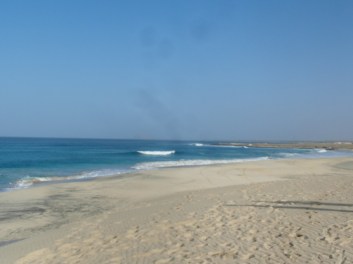
Cape Verde comprises 10 tropical islands in the Atlantic Ocean, 450 km off the west coast of Africa. Perfectly placed to find all-year round sunshine!
With a currency fixed to the Euro, politically very stable and fantastic beaches, it is the next up and coming destination. The problem is it has been up and coming for quite a few years now and is still in need of some serious investment.
The islands are littered with part-built apartments and half-constructed hotels – and, consequently, deserted beaches.
If you are happy to chill out in the sunshine, read books and sleep, this is the perfect location. If it’s sightseeing you’re after, don’t bother to read on. Go elsewhere.
There are only four ‘main’ roads on the largest island of Sal. A short drive from the main resort area of Santa Maria are the salt pans at Pedra de Lume. Nestled in the crater of an extinct volcano, the salt pans – once the lifeblood of the island – are no longer commercially viable. Instead, they have become Cape Verde’s answer to the Dead Sea: the chance to float weightlessly in the mineral-rich waters which will rejuvenate your mind and body and knock 20 years off your life. Allegedly.
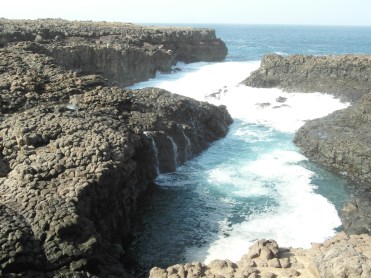
You can still feel the heat from the 5 million-year old volcano on your feet as you wade into the waters – even though it has been dormant for the last 3,000 of them.
Jose Luis Garcia Cuevas, Area Director of the Melia Hotel group on Cape Verde, believes that the islands and their burgeoning hotel business will be a magnet for low cost and budget airlines within six to 10 years, making this idyllic outpost more akin to its nearest neighbours, the Canaries – and the new Caribbean, only closer and more affordable.
With a flying time of only six hours and a two-week all-inclusive holiday in a five-star hotel still possible for under four figures, the Cape Verde islands are ideal for sun-seekers who really do want to get away from it all.
The beaches – a short stroll from the black volcanic rocks – are heavenly and the island of Sal is a dream for lovers of water sports and one of the top three kitesurfing locations in the world, alongside Fuerteventura and Haiti. It also offers some dramatic diving opportunities.
From the beach at Murdeira, you might even be lucky enough to spot dolphins at play. And, between July and November, make sure you visit the turtle sanctuary to see these magnificent protected species laying – or hatching – their eggs.
Cuevas came to Cape Verde from his home in Lanzarote to manage the Melia Tortuga which opened in December 2012. Plans were already in the pipeline for the Melia Dunas Beach, which followed in October 2014. The Llana Resort and Spa opened at the start of this year, completing a very acceptable hat trick for the Melia group.
Described as ‘an adults-only paradise right on the beach’ the 5* Llana has a luxury ‘bikini beach’ bar and restaurant complex within a man-made lagoon. Its rooms and suites have spectacular sea views and standards are all you would expect – so much so it hit the No 1 spot on TripAdvisor within months of opening its doors.
Cape Verde has a little over half a million inhabitants (tourists excepted) and has established its own Tourism and Hotel School to ensure that the locals get the very best training in order to provide the exceptional service today’s discerning travellers expect. (Melia Hotels employ 95% local people.)
With its all-year round temperate climate, it is perfect for the holidaymaker, but not so great for the locals. The hot, dry summers and hot, dry winters mean nothing – yes, nothing, grows on the island. The few cows, the odd donkey and passing goats look painfully malnourished.
Thankfully, bulging cargo ships dock daily at the tiny port of Palmeira bringing an abundance of fruit, veg and meat from the Canary Islands and further afield which means the main hotels offer some of the best and most varied food you will find anywhere.
With the thought that Cape Verde could soon become the next Tenerife, you could do worse than pack your bags and head for this Atlantic idyll sooner rather than later.
No stress.
 Globetrotting4Grannies