It’s 11am and I’m on a train, 3,800 metres above sea level, dancing to ‘Johnny be Good’ played on pan pipes.
I’ve not been taking hallucinogenic drugs or cocaine – although I have, admittedly, had one Pisco Sour and drunk quite a lot of Coca Tea.
The tea – which almost cost Peru’s football team captain Paolo Guerrero his place in the last World Cup squad – is the most common antidote to altitude sickness which can affect tourists who aren’t used to the literally dizzy heights you encounter in the Andes.
Alcohol, on the other hand, is not recommended. Oops. (Well, it was only the one Pisco Sour.)
Mention Peru to most people and they immediately respond with ‘Machu Picchu.’ It’s like saying the UK is ‘London.’
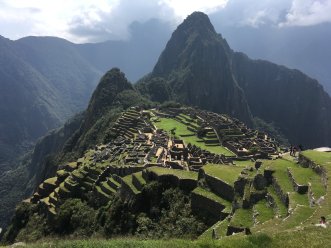 Peru is a country of spectacular contrasts – the bustling capital of Lima houses one third of the country’s 30 million people, while Arequipa, the second largest city a further 1.5million. Both are a must once you’ve flown 11.5 hours to get here.
Cusco – the magnet for backpackers wanting to walk the Inca Trail – is Peru’s third largest city with a mere 500,000 people, which means an awful lot of indigenous people still live in remote rural communities, surviving on their self-sown foodstuffs, the odd cow, sheep or alpaca – and a donkey to carry surplus produce to market, where they barter for other essentials. It’s this side of Peru you really need to see, not the commercialism of Cusco.
The country folk thrive on a home-grown diet supplemented by natural herbs and remedies and, if the guides are to be believed, Peruvians discovered antibiotics long before Alexander Fleming stumbled upon penicillin. Layering potatoes with grass and leaving them to rot results in a foul-smelling substance capable of curing pretty much all ills….
At a village school on the Socca Peninsula, 35 miles south of Puno, the children happily recite the English alphabet and count from 1 – 10. But, as their teacher explained, “They have no idea where England is, are unlikely to ever go there and are fascinated to see white faces in the classroom.”
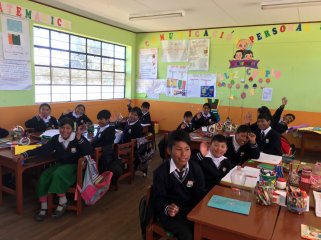 They look amazed when we show them on a map and explain how far we’ve flown. In such a poor economy, they will be lucky to even make it to Lima.
It’s not only young backpackers who flock to South America though – most new-age explorers are actually older-age.
They’ve been and done the Far East so South America has become the latest ‘go to’ destination.
Val and Nick, from Auckland, New Zealand, were in their late 60s and had organised their three-week tour themselves.
“Pick your destinations, plan the route, book the hotels and then the tours. We reckon we saved 50% doing it that way,” advised Val.
Indeed, with a decent guide book, you can get around many of the major sights yourself and taxis are cheap. Plenty of companies will supply a private minibus and personal tour guide, however, should you feel you need a security blanket. Coltur Peru proved particularly good.
The standard of hostels and hotels is exceptional too, as is the food. At the Barranco Backpackers hostel in the eclectic Barranco district of Lima, you can get a private room for £37 or share a dorm for £9.
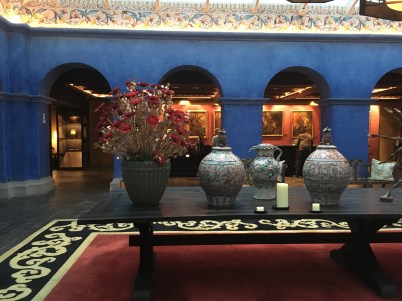
At the other end of the scale, the Libertador group, which owns some of the best hotels in South America, has rooms on a private island on Lake Titicaca. They also have properties in several other main cities. In Cusco, at the Palacio del Inka, the manager takes you on a guided tour of the hotel explaining how the Incas built it as a fortress in 1432.
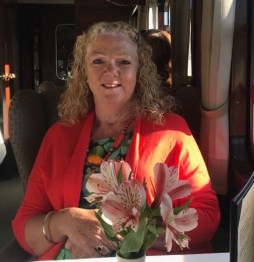
 Diane, 60, from Blackpool had just retired – and wanted to celebrate. “I’ve always wanted to visit Peru and now, thanks to my lump sum, I can do – while I’m still fit and well enough.”
The other ‘must do’ in Peru is to take a ride on the Titicaca Train, which is where I came in (before I went off the rails).
This steam-pulled Pullman is the Peruvian answer to the Orient Express and plies the narrow line twixt Puno and Cusco four times a week – twice in each direction. Such a rare sight is it that even the llamas and alpacas look up from their grazing to see what the fuss is all about.
The 11-hour journey through the towering mountains, some snow-capped, passes right through the middle of the market at Juliaca, where the train rubs shoulders with stallholders selling everything from herbs and spices to car tyres and power tools. Andean women, in hats, shawls and thick tights, sit beside the tracks, knitting in the sunshine.
The train’s musical entertainment – pan pipes, ukelele, electric guitar, sax and drums – soon has everyone up and dancing.
Then it’s time for a fashion show of pure alpaca garments, before a three -course lunch, with wine. Afternoon tea plus copious amounts of agua sin gaz – you need it at this height – are all included.
As the train pulls into Cusco half the passengers are snoozing.
The rest of us are looking forward to a hike up Machu Picchu. Well, it has to be done, doesn’t it?
#silversurfing #travel #libertadorhotels #selectlatinamerica #retirement #southamerica
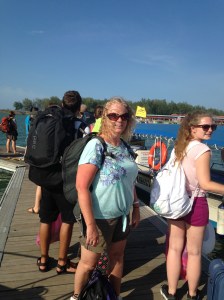 As the crazed craft bobbed and lurched, I became painfully aware that most of the vertebrae in my spine were slowly being realigned.
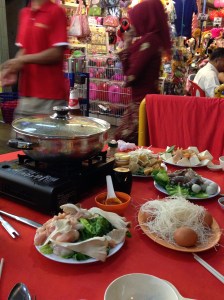 Rice and noodles abound, as you might expect, but Western food has – sadly – found its way onto the menu of most beachside bars. But don’t wait until you are hungry before deciding to eat – service can take up to two hours at the most popular cafes!
 Globetrotting4Grannies