Andean Adventures

It’s 11am and I’m on a train, 3,800 metres above sea level, dancing to ‘Johnny be Good’ played on pan pipes.
I’ve not been taking hallucinogenic drugs or cocaine – although I have, admittedly, had one Pisco Sour and drunk quite a lot of Coca Tea.
The tea – which almost cost Peru’s football team captain Paolo Guerrero his place in the last World Cup squad – is the most common antidote to altitude sickness which can affect tourists who aren’t used to the literally dizzy heights you encounter in the Andes.
Alcohol, on the other hand, is not recommended. Oops. (Well, it was only the one Pisco Sour.)
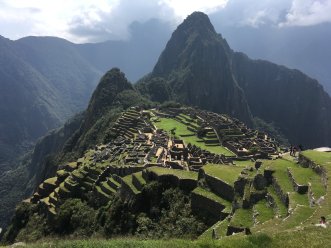
Mention Peru to most people and they immediately respond with ‘Machu Picchu.’ It’s like saying the UK is ‘London.’
CYyP1f0ERMua5vlUKHmgXwPeru is a country of spectacular contrasts – the bustling capital of Lima houses one third of the country’s 30 million people, while Arequipa, the second largest city a further 1.5million. Both are a must once you’ve flown 11.5 hours to get here. 
Cusco – the magnet for backpackers wanting to walk the Inca Trail – is Peru’s third largest city with a mere 500,000 people, which means an awful lot of indigenous people still live in remote rural communities, surviving on their self-sown foodstuffs, the odd cow, sheep or alpaca – and a donkey to carry surplus produce to market, where they barter for other essentials. It’s this side of Peru you really need to see, not the commercialism of Cusco.
The country folk thrive on a home-grown diet supplemented by natural herbs and remedies and, if the guides are to be believed, Peruvians discovered antibiotics long before Alexander Fleming stumbled upon penicillin. Layering potatoes with grass and leaving them to rot results in a foul-smelling substance capable of curing pretty much all ills….
At a village school on the Socca Peninsula, 35 miles south of Puno, the children happily recite the English alphabet and count from 1 – 10. But, as their teacher explained, “They have no idea where England is, are unlikely to ever go there and are fascinated to see white faces in the classroom.”

oVX0J1-JQR2N6tCiCYm0JQThey look amazed when we show them on a map and explain how far we’ve flown. In such a poor economy, they will be lucky to even make it to Lima.

It’s not only young backpackers who flock to South America though – most new-age explorers are actually older-age.
They’ve been and done the Far East so South America has become the latest ‘go to’ destination.
Val and Nick, from Auckland, New Zealand, were in their late 60s and had organised their three-week tour themselves.
“Pick your destinations, plan the route, book the hotels and then the tours. We reckon we saved 50% doing it that way,” advised Val.
Indeed, with a decent guide book, you can get around many of the major sights yourself and taxis are cheap. Plenty of companies will supply a private minibus and personal tour guide, however, should you feel you need a security blanket. Coltur Peru proved particularly good.
The standard of hostels and hotels is exceptional too, as is the food. At the Barranco Backpackers hostel in the eclectic Barranco district of Lima, you can get a private room for £37 or share a dorm for £9.
At the other end of the scale, the Libertador group, which owns some of the best hotels in South America, has rooms on a private island on Lake Titicaca. They also have properties in several other main cities. In Cusco, at the Palacio del Inka, the manager takes you on a guided tour of the hotel explaining how the Incas built it as a fortress in 1432.
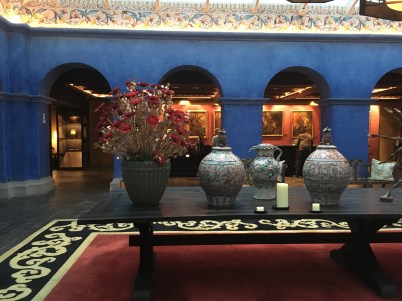
cusco hotelDiane, 60, from Blackpool had just retired – and wanted to celebrate. “I’ve always wanted to visit Peru and now, thanks to my lump sum, I can do – while I’m still fit and well enough.”
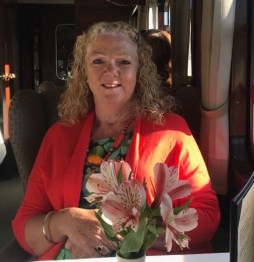
The other ‘must do’ in Peru is to take a ride on the Titicaca Train, which is where I came in (before I went off the rails).
This steam-pulled Pullman is the Peruvian answer to the Orient Express and plies the narrow line twixt Puno and Cusco four times a week – twice in each direction. Such a rare sight is it that even the llamas and alpacas look up from their grazing to see what the fuss is all about.
train cropped

The 11-hour journey through the towering mountains, some snow-capped, passes right through the middle of the market at Juliaca, where the train rubs shoulders with stallholders selling everything from herbs and spices to car tyres and power tools. Andean women, in hats, shawls and thick tights, sit beside the tracks, knitting in the sunshine.
The train’s musical entertainment – pan pipes, ukelele, electric guitar, sax and drums – soon has everyone up and dancing.
Then it’s time for a fashion show of pure alpaca garments, before a three -course lunch, with wine. Afternoon tea plus copious amounts of agua sin gaz – you need it at this height – are all included.
As the train pulls into Cusco half the passengers are snoozing.
The rest of us are looking forward to a hike up Machu Picchu. Well, it has to be done, doesn’t it?

#silversurfing #travel #libertadorhotels #selectlatinamerica #retirement #southamerica
 

Too wet to woo? Not here!

When a friend introduced me to the Merlin Bird ID app, which records and recognises birdsong, what better place to test it out than Northumberland’s  Farne Islands ?

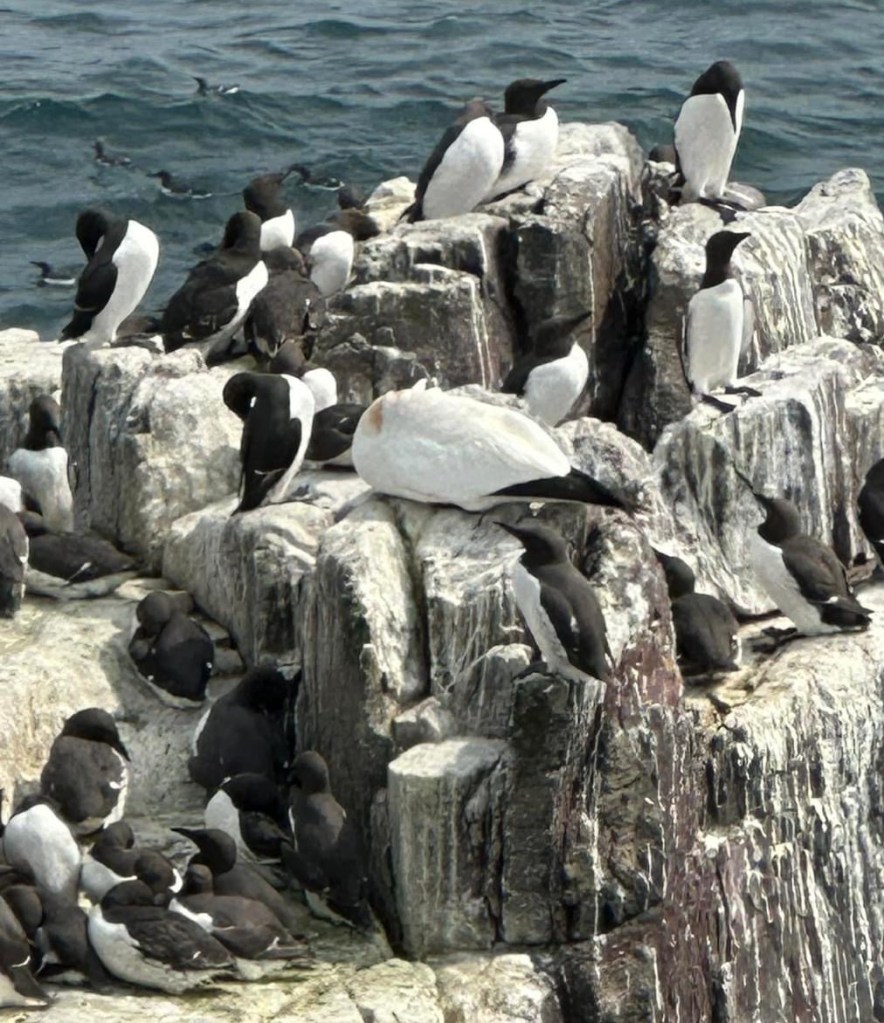
Home to 23 species, the islands form quite probably the most fascinating seabird colony in England.

For those of us who live on the coast, paying £30 to visit a flock of seagulls might seem a tad excessive ; but this is not merely a holiday resort for those chip-stealing, car-pooping pests. It’s an opportunity to get up close and personal with puffins, plovers, cormorants, guillemots and – if you’re lucky – the occasional shag ( no rude jokes please !) plus another 17 winged varieties.

Unsurprisingly, perhaps, it’s those pesky gulls that continue to predate – pinching any unguarded eggs from the myriad of nests which cling precariously to the nooks and crannies of the cliffs.

Huddled together on the guano-glistening slopes, tens of thousands of birds live in relative harmony, chirping, tweeting, mating and egg-laying throughout the spring.

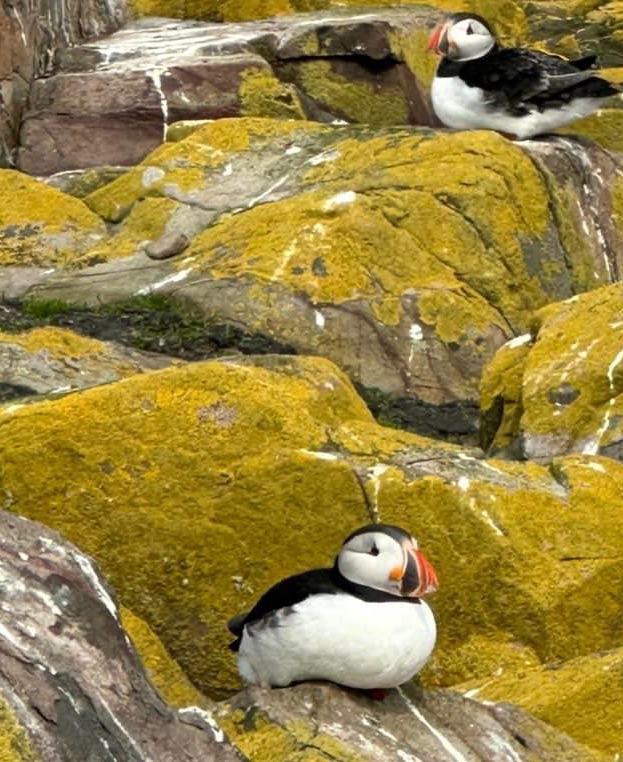
Thankfully Mother Nature has armed the puffins with an element of wisdom which enables them to outwit the greedy gulls. There are more than 40,000 pairs of puffins on Staple Island alone, each living up to 30 years. Faithful to the last, they mate for life and, mating over, they dig little holes, not unlike rabbit burrows, into the earth, where they drop the eggs then take it in turns to stand guard until they hatch.

Other species are less conscientious, however, and more nervous birds who are panicked into leaving their posts frequently return to find all their eggs are no longer in one basket, but in the stomach of some great black-backed gull. Its cousin, the black headed gull, meanwhile can be found busy stealing fish from the parent puffins.

Jonathan Livingston Seagull this is not !

The Farne Islands were first inhabited in the 7th century, when St Cuthbert established a monastery on Inner Farne. Inner Farne is currently the only island open to visitors, after the recent outbreak of Avian flu came hard on the heels of the Covid years. It still contains a tiny stone-built chapel and lighthouse tower, built in the 16th century.

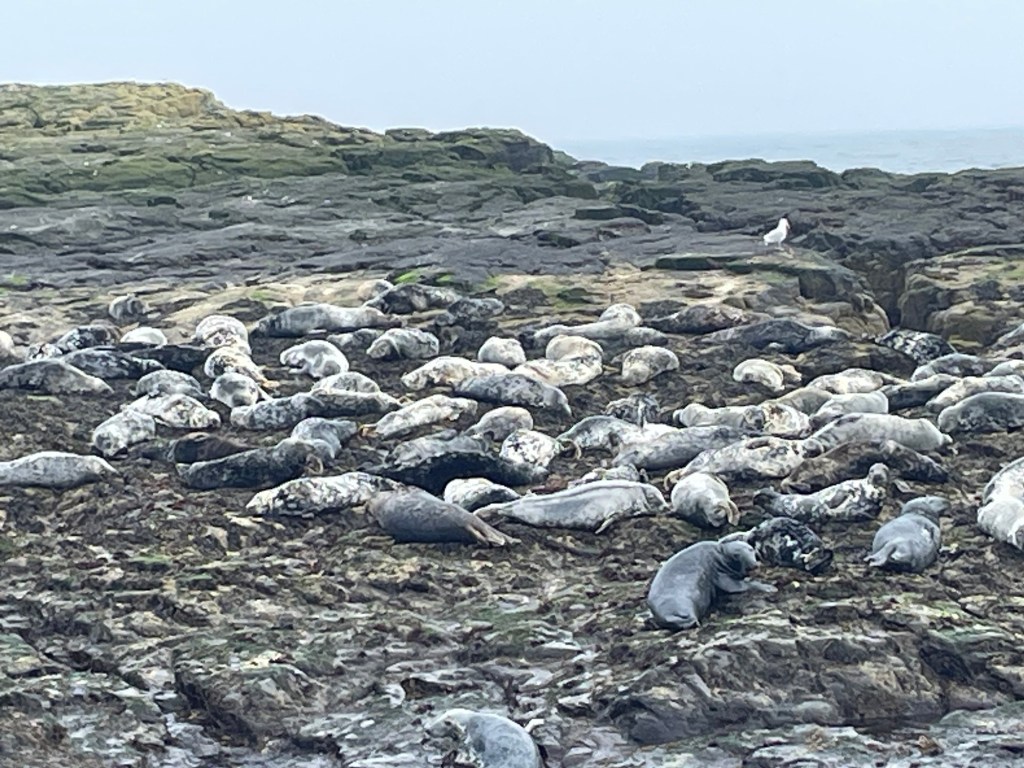
Basking on the shores of nearby Staple Island you’ll see dozens of seals, occasionally waving a wet flipper to the passing boats. And if you’re really lucky, dolphins might be at play in this particular section of the North Sea.

The islands – 28 at low tide and 14 at high water – are now managed by the National Trust and a team of rangers live on the islands from March to December, monitoring the bird population as well as trying to keep down the invasive species of nettle, dock leaf and other weeds which are threatening the birds’ breeding grounds.

Weather permitting, boats sail every day to the islands from Seahouses. Some merely cruise around the outcrop  (I use the word cruise loosely….) but if you want to step ashore you’ll pay a further £13 to the National Trust. But it’s an experience not to be missed, especially on a sunny day.

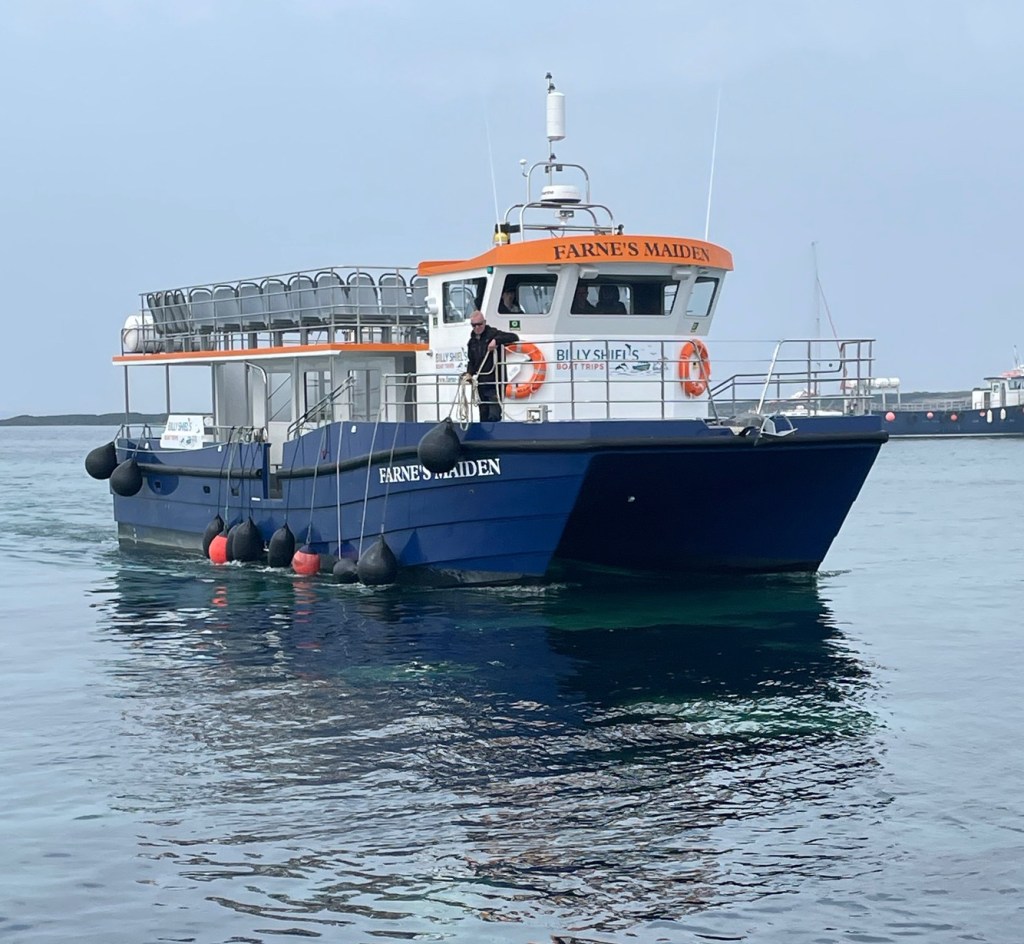
Operator Billy Shiel’s recently added a new catamaran to its fleet and the captain and crew do their utmost to make your trip both safe and enjoyable.

Oh – and don’t forget that Merlin app ! We picked up more than a dozen ‘tweets’ – and not on t’internet ! ( That’s because Twitter is now X – Ed.)

PS Thanks to Diane Bellinger for some stunning bird images.

The Long and Winding Road….to Liverpool!

Mention the city of Liverpool and the next word which springs to mind is almost certainly ‘Beatle.’

Not the six-legged creepy crawly variety but the Fab Four – John, Paul, George and Ringo.

Scarily, it’s more than 60 years since those four young lads from Liverpool burst into our lives and changed the shape of popular music for ever.

Even more remarkable, perhaps, is the fact their active career as a band spanned only 10 years, yet their legacy has lasted a lifetime.

Between 1962 and 1970, the Beatles recorded a staggering 213 songs, mostly written by the prolific pair John Lennon and Paul McCartney.

Small wonder then that Liverpool continues to draw music fans from all over the globe.

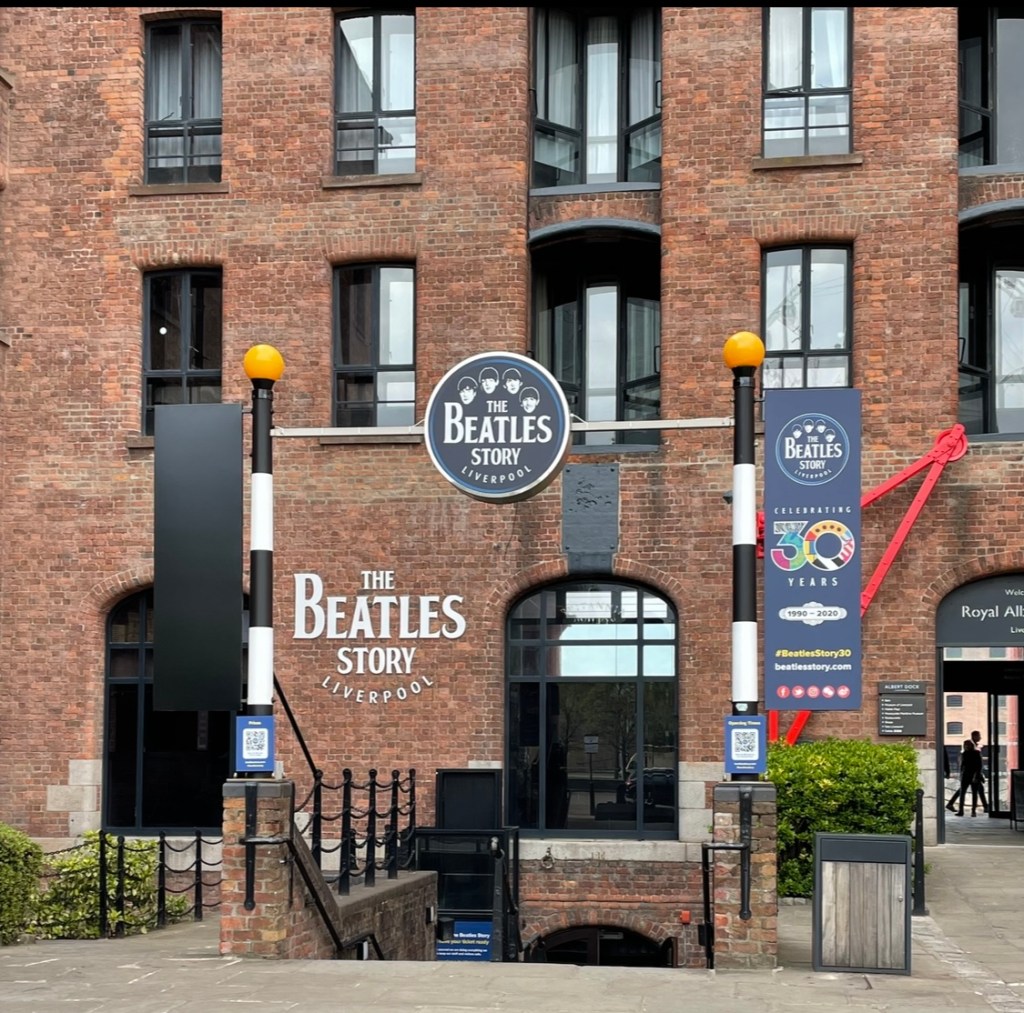
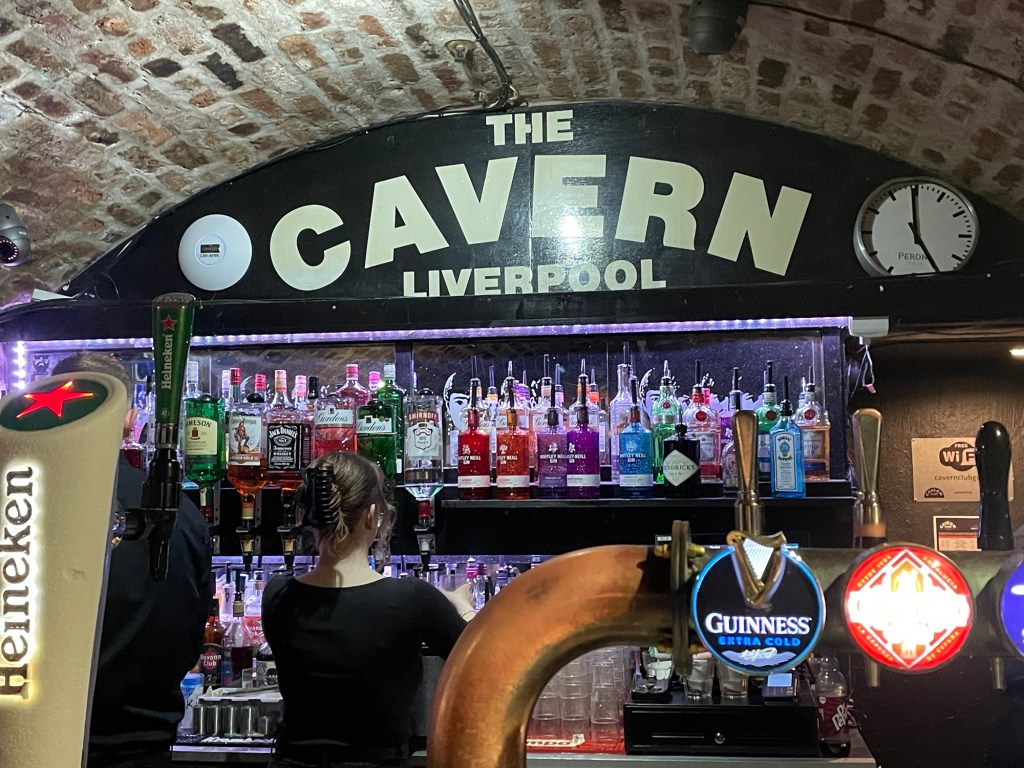
Whether it’s to learn more about the origins of the band and their early influences at The Beatles Story (find it at The Albert Dock) or to meander along Mathew Street to the famous Cavern Club, where the Beatles and many other ‘60s bands cut their teeth, folk flock to Liverpool for a slice of the still very evident ‘vibe.’

The Beatles Story

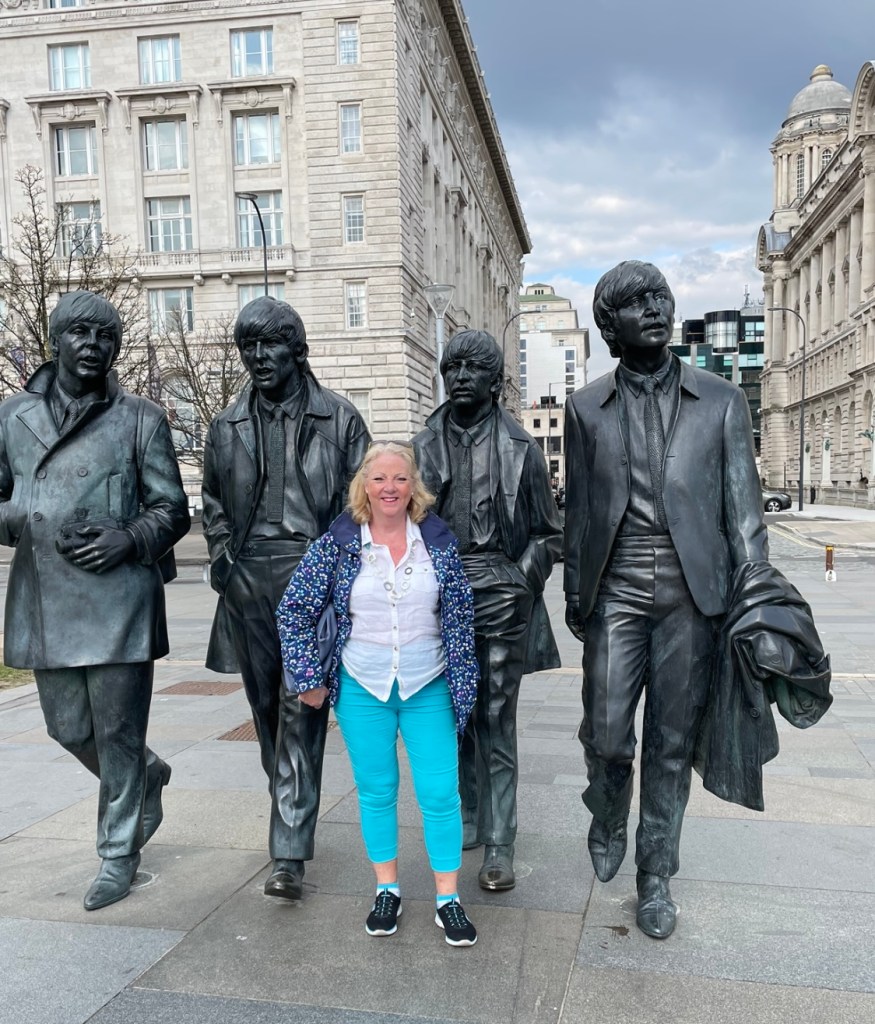
You won’t want to miss the Beatles Statue outside the ferry terminal  (opposite the Liver Building) – though you might need to jostle with a queue if you want your photo with the boys. And if you want to find the Yellow Submarine, you’ll need to drive eight miles out of town to the John Lennon airport.

Yours truly and the Fab Four

Such has been the influence of the Beatles –  and the Mersey beat in general – that Liverpool now has its own Cavern Quarter.

You don’t need a map to find it; pin back your ears and follow the sound of the throbbing music pouring out of the numerous pubs and clubs around Mathew Street.

It’s a natural magnet for hens and stags at the weekend so maybe not one for the faint hearted. Visit midweek for a slightly less robust experience!

The Cavern Club offers live music seven days a week from opening time at 11am until midnight or beyond and is a ‘must do’ for anyone wanting to see where the likes of Cilla, the Beatles and Billy Fury were discovered. There’s a £5 admission fee (£7.50 if you want to come and go all day) but well worth it to hear some of the city’s best tribute acts.

The original cellar room now has the addition of the adjacent Cavern Live Lounge, offering yet more events – generally ticketed, however, and advance booking is advisable.

If you still need more of a music fix, across the road from the Cavern Club is the Cavern pub where there’s more live music – free this time – every night of the week. Nearby, you’ll find Legends, The Glass Onion, White Star, Flanagan, Scruffy Murphy’s ……..you get the picture?

There’s also a Beatles Museum, Magical Mystery (bus) Tour of the City or, for the real devotees, private escorted taxi tours of the main Beatle landmarks, including the childhood homes of John and Paul.

Now owned by the National Trust, you need to book your visit in advance, however, as numbers are strictly limited to 15 per tour – and there are a maximum of four tours per day.

Finally, if you’re staying in Liverpool overnight, you might want to complete your visit with a stay at the Hard Day’s Night hotel in North John Street.

Of course, there’s much more to Liverpool than the Beatles. Dare I suggest you take a ‘Ferry ‘cross the Mersey’ to the wonders of the Wirral? Or explore the majestic twin cathedrals or the many museums?

 But more of that another time!

A Wine Theme Park? I’ll Drink to That!

Macon, Pouilly Fuisse, Fleurie …… names I’d only ever seen on the front of a wine bottle before.

Now here I was soaking up the atmosphere of the Beaujolais – as well as the wine – surrounded by vineyards and pretty little villages bearing those exact names!

At the heart of the Beaujolais I stumbled – not under the influence of alcohol, but with the help of friends – across Europe’s first theme park devoted entirely to wine.

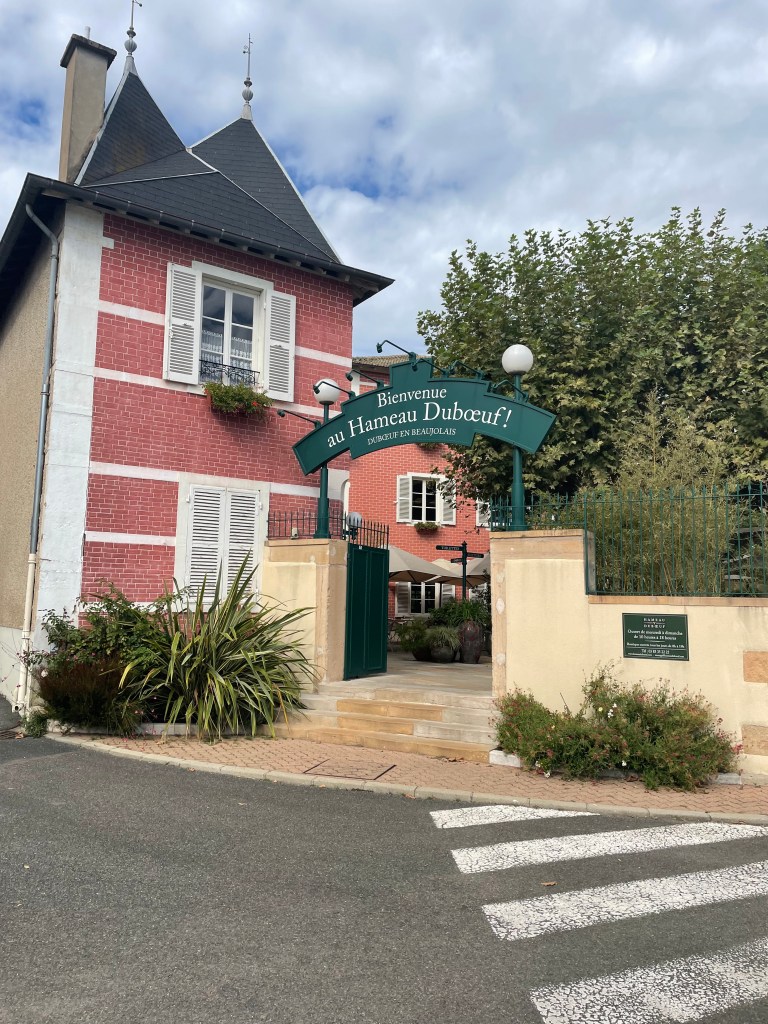
Le Parc du Hameau Duboeuf sits in the tiny village of Romaneche -Thorins, at the heart of the Beaujolais region.

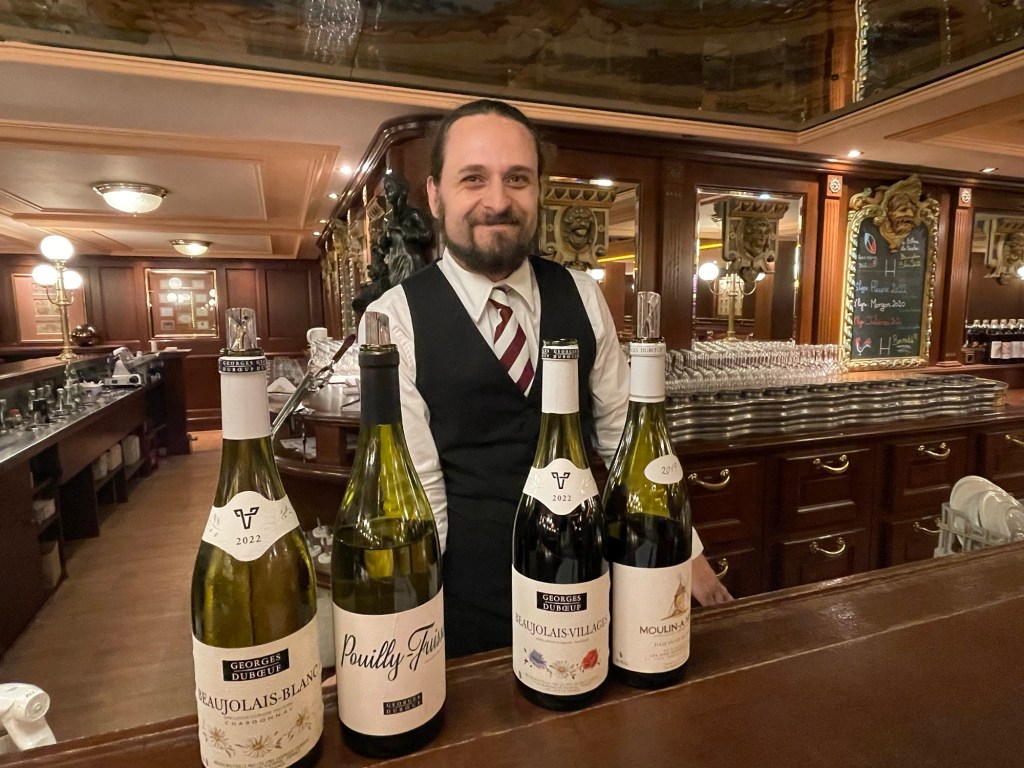
Georges Duboeuf is probably the most prolific producer of Beaujolais Nouveau, with his ‘cave’, now run by son Franck, turning out some 30 million bottles of the stuff each year.

With much of it being exported to Japan, Germany and the USA, that keeps an awful lot of people around the world very happy!

Thirty years ago, Georges, who sadly passed away in 2020, wanted to share his passion for wine by coming up with a ‘wine park’ – a theme park, but with wine. Lots of wine.

Expanded and extended year upon year, the Parc Hameau Duboeuf now welcomes 100,000 visitors every year, who get to take a behind-the-scenes look at the world of wine and the vines.

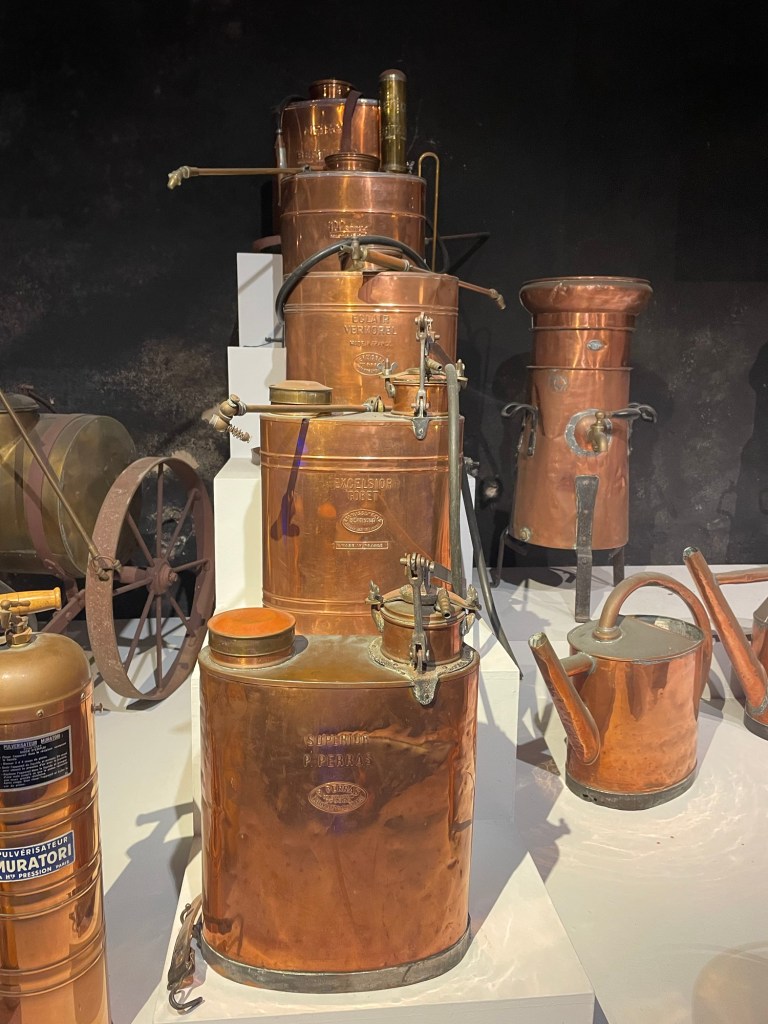
The museum contains more than 3,000 wine-related objects, covering 2000 years of history. Rough-hewn tools sit alongside the enormous early wooden wine presses and fact-packed glass cases of Macon memorabilia.

Georges didn’t only focus on the adult trade when devising his ‘parc’ however and has incorporated interactive games, holograms and videos; a blend almost as smooth as the wines themselves.

In summer, there are the added attractions of a mini road train, mini golf and an aromatic Beaujolais garden. Even the 10 holes on the golf course are named after the “crus” of the Beaujolais.

Don’t expect too much of an adrenalin rush however. Here, the scariest ride you are likely to encounter is the ‘flight’ above the vineyards of the region or a tour around the extensive gardens on the mini train.

Do these before you hit the bar, though, or you could find the ‘flight’ over the undulating plains and vine-clad hillsides on the back of a 3D bee a tad nauseous.

The newest addition – the former railway station used to transport the Duboeuf wines to Paris – opened earlier this year, houses a magnificent old railway carriage and clever audio-visual show.

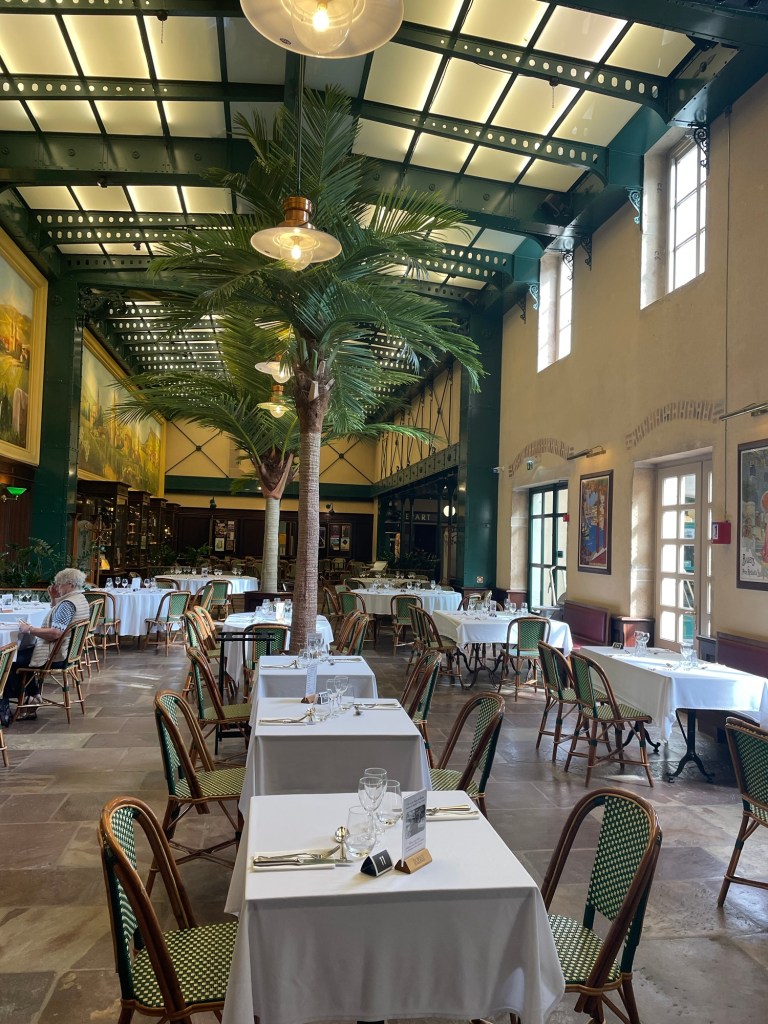
The parc’s on-site restaurant provides a timely break from the 20-odd exhibition rooms and a leisurely lunch in the courtyard or rail-inspired conservatory will sets you up for the rest of the day. The fixed price menu at €30 is good value and, of course, you get the chance to accompany it with a nice glass of Duboeuf wine!

Oh – and did I mention the wine tasting?  That’s included in the €20 entry price too.

Beaujolais has been dubbed ‘the wine of love and happiness’ or ‘the drink of joy and wisdom.’ 

I certainly came away full of joy and happiness – and maybe with a bit more wisdom than I went in with – plus a few bottles from the shop to enjoy back at home.

L’Hameau Duboeuf is 45 minutes from Lyon and easily accessible by rail or road, sitting just a few kilometres from the A6 which runs north-south through France.

Most low-cost airlines fly to Lyon with prices starting from £26.

The Parc is open from March to December, Wednesday to Sunday from 10am to 6pm – although the garden, train and mini-golf close at the end of September.

The shop is open daily throughout the year, with the exception of Christmas Day.

Adult day tickets are €20. Children under 7 go free, those above are half price.

Peace in our time

I’d not seen so many Union Jacks since William married Kate. The patriotism was remarkable – even more so given I wasn’t even in England. There were flagpoles on the porch of virtually every house on this tidy estate. Yet there were no signs of celebration – just an eerie stillness. Neat gardens – the lack of litter quite remarkable – and no sign of children playing out in the street. But this was a Sunday morning. Maybe everyone was at church?

I was in the midst of Belfast’s Shankill estate.

It might mean little to readers under 30, but for those of us who grew up in Britain in the ‘70s and ‘80s, the Shankill Road, together with the neighbouring Falls Road, were rarely out of the headlines. This was the district at heart of ‘the troubles,’ as they were called.

The fact that more soldiers died here than in the Bosnian, Afghanistan and Falkland wars combined seems to have been overlooked by the British politicians – and press – who referred only to ‘the troubles’ during more than 20 years of mindless bombings, shootings and cross-party retaliations.

For many years after the peace treaty was signed in 1998, Belfast was considered a ‘no go’ area for British tourists – indeed there are still those who prefer to give it a wide berth. But sitting in the quaint old Crown pub on a Saturday evening, being regaled with dirty jokes by a trio of septuagenarians I’d never clapped eyes on before, I got a real flavour of the Irish spirit – and the ‘craic’ for which it is so well known. Paddy (aka Kevin) didn’t care what nationality or faith I was. He was just happy to share the craic and see that I was spending my cash in his country.

Tourism is now taking off in Northern Ireland – in the past two years, the number of hotels has doubled. This is thanks in no small part to the popular Game of Thrones series, filmed in a variety of locations around Northern Ireland.

You can now take tours around the film locations – there’s even a 66-metre tapestry depicting the series on display in the Ulster Museum which, when finished, at 77 metres, will be longer than its inspiration – the Bayeaux Tapestry. Well worth a visit – and it’s free.

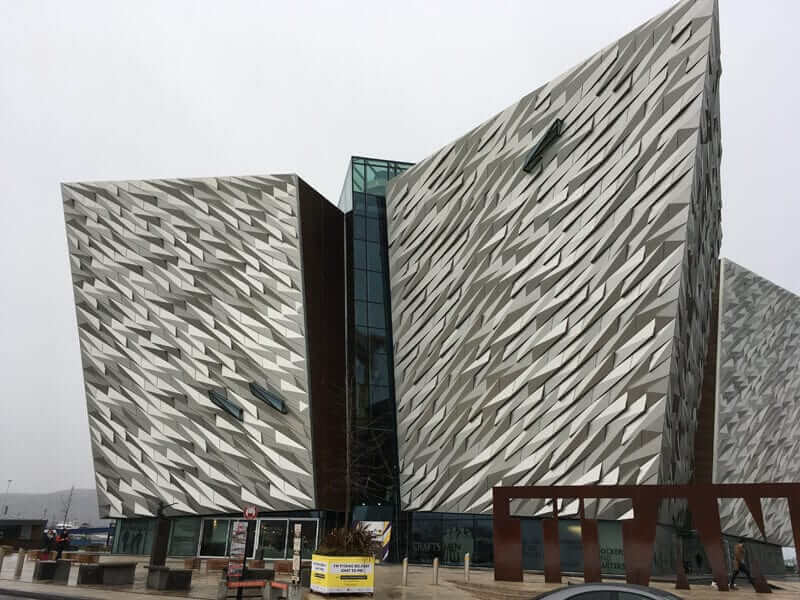
On a short break to Belfast, a visit to Titanic Belfast is also a must.

The Irish are rightly proud of this great engineering feat and the exhibition dwells heavily on the skill and expertise which went into the vessel’s construction and less on the failings which led to its notorious sinking on the maiden voyage from Southampton to the USA.

But it was the Black Cab tour that left the most lasting impression of my weekend in Northern Ireland. Following an IRA raid on the Northern Bank in December 2004, there were reports of stolen cash being ploughed into assets such as pubs, restaurants – and black cabs. Some of the brains behind the daring robbery no doubt dreamed up the idea of the Black Cab tours, for there are dozens of them at a time cruising round the streets of Shankill and the Falls.  Make sure you book one.

I hadn’t realised that the Protestants still light towering bonfires on Orange Day, burning the Irish tricolor flag at the top – just so the Catholics in the Falls Road can see it above the towering monstrosity ironically dubbed ‘The Peace Wall.’ Nor that this wall – 2.5 miles long and with five sets of gates, is still locked each night at 6pm and closed all day on Sunday, in a bid to keep the two factions apart.   And, at 15 metres tall, it is higher than the Berlin wall ever was.

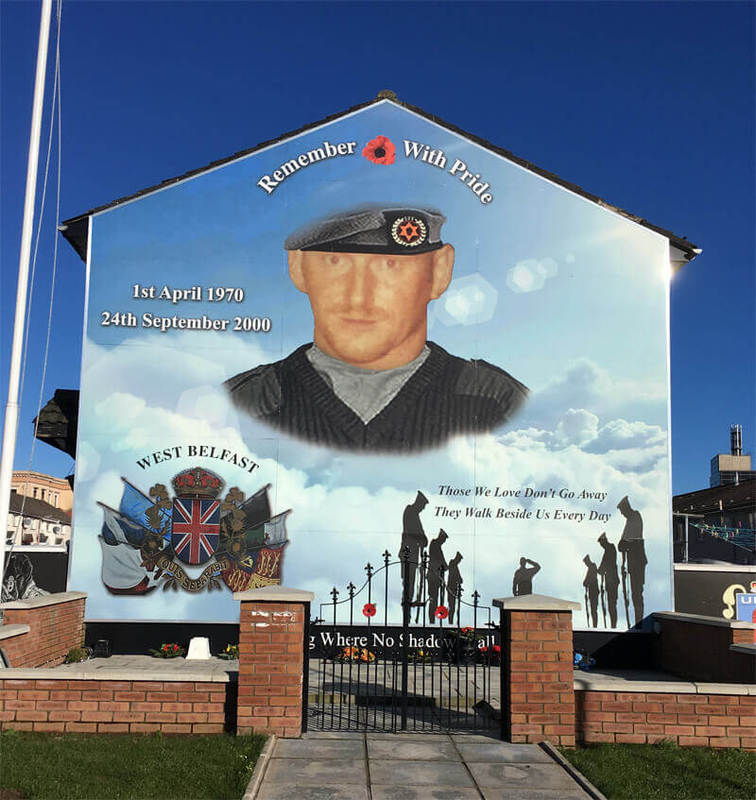
Today, Belfast looks no different to any other city.  No lasting evidence of the streets razed to the ground and houses blasted skywards by car bombs. Just the countless gable ends with their imposing murals which bear tribute to those who were interred. It’s a sobering but enlightening experience.

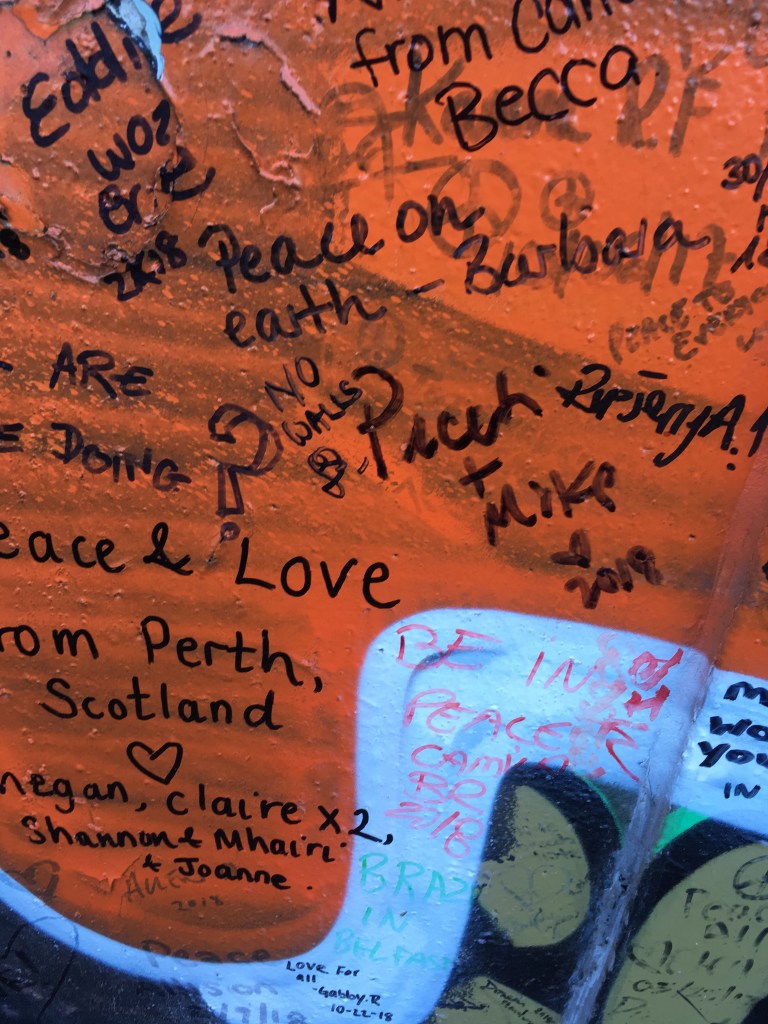
With the help of a pen obligingly supplied by the Irish black cab driver, I added my brief message to the Peace Wall, joining names like Tom Cruise, Bill Clinton and Barack Obama. I’d never encountered legalised graffiti before. But then I’d never been to Belfast – and looked at life from both sides of the Peace Wall.

Only here for the (rein)deer….

When a mutual friend hit her landmark 50th birthday, eight of us gleefully boarded a Virgin Atlantic plane and jetted off to the city that never sleeps – New York, New York.

Ten years on, the question was – how to top that?

The decision naturally had to come from the birthday girl who, after several hours of dedicated research, informed us that she wanted to see the Northern Lights – and the best vantage point was Tromso, in Northern Norway.

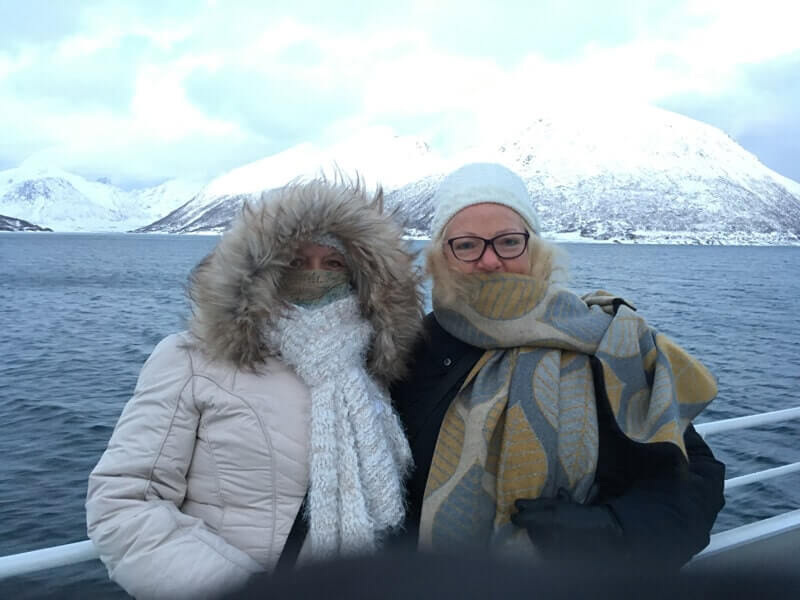
Given that temperatures rarely rise above freezing in Tromso in December – we all gave a little shudder at the prospect but buckled down for a very different adventure. All for one and one for all and all that.

Mutually frozen friends!

There are direct flights from Gatwick to Tromso with Norwegian almost daily and it takes just 3.5 hours to reach the frozen North. Most other airports stop off at Oslo which can mean doubling the length of the journey – but I’ve spent time in worse airports. Stepping out of the plane onto Nordic soil – or, rather, snow – we felt a tad like we had entered the land behind CS Lewis’ famous wardrobe!

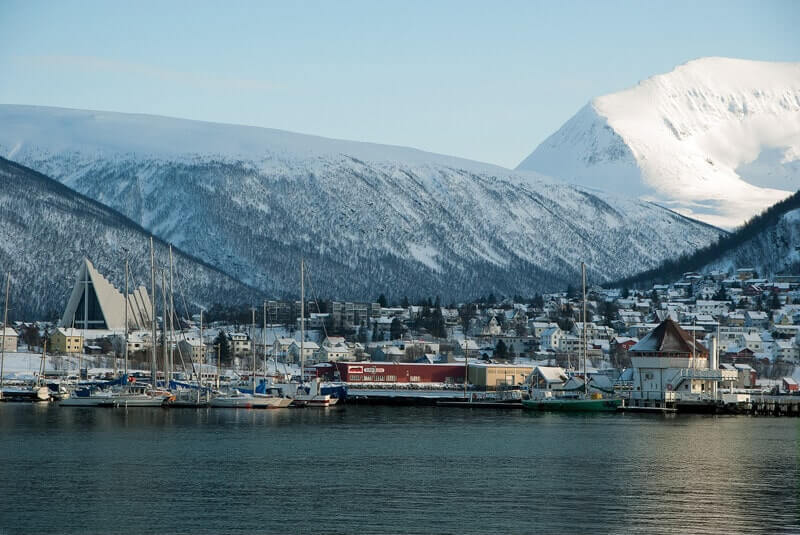
There were no roads to be seen – just a vast expanse of the white stuff  and the silence was almost as chilling as the temperature. However, the welcome was undeniably warm at the Radisson Blu Hotel, overlooking Tromso’s pretty little harbour.

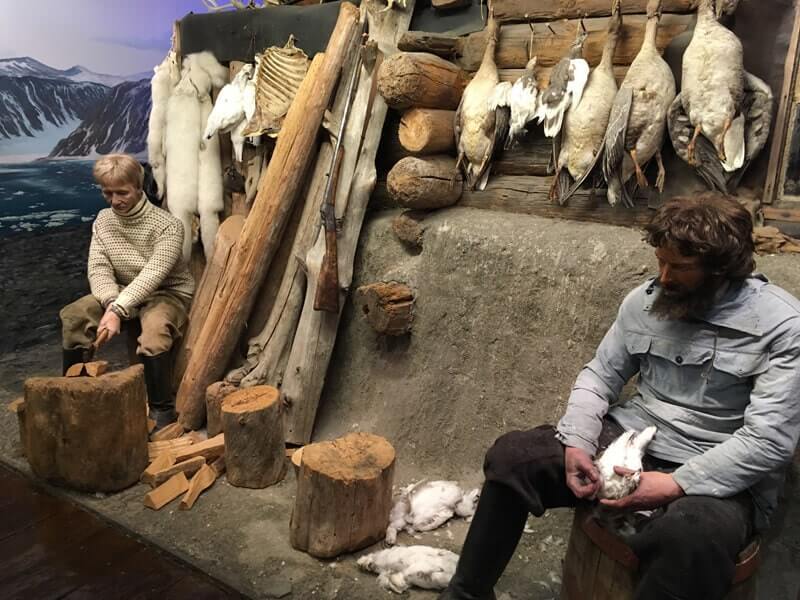
The Polar Museum

Tromso is home to the fascinating Polar Museum, which tells the story of the many brave Arctic explorers who have set out from here over the centuries, armed with little to protect them from the elements – and the polar bears.

The town also boasts the magnificent modern Arctic Cathedral. Constructed in 1965, it contains one of the largest glass mosaics in Europe, added in 1972 by artist Victor Sparre, and is a sight not to be missed. Whilst this part of Scandinavia is famed for its midnight sun, it’s a very different kettle of (smoked or salted) fish in the winter. With just four hours of daylight, this really is life in the twilight world.

The streets seem eerily deserted, with tourists forming the larger part of any pedestrians. But with temperatures this cold, most are tucked up warmly indoors, sampling the excellent local cuisine or warming wines – or out on one of the many excursions which you just have to take if you come here.

Tromso Cathedral across the bay

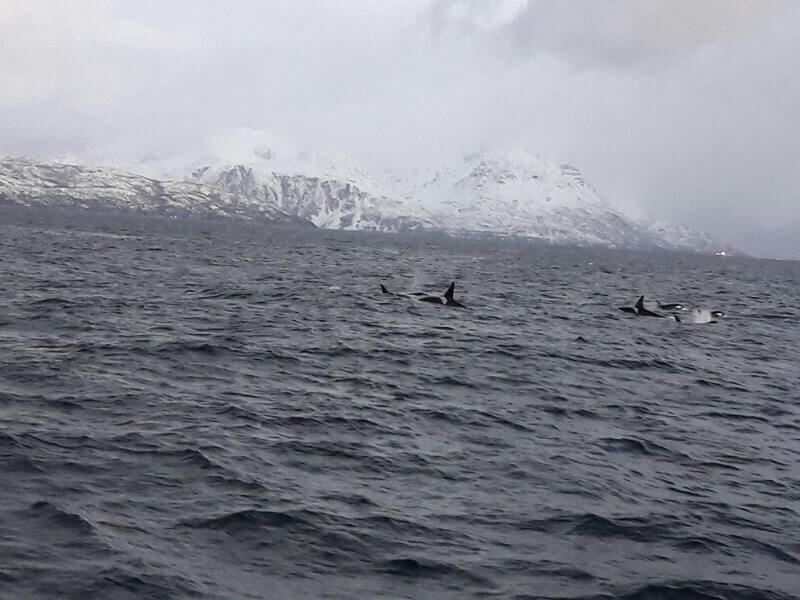
Husky sledding, whale watching and visits to a reindeer farm are among the most popular – although feeding these lovely beasts prior to tucking into a casserole containing their relatives might not be to all tastes. Whale watching – as with Northern Light spotting – is a bit of a gamble. We were fortunate to see shoals of both humpback and Orca whales, playing joyfully in the ocean not far from our boat.  However, it’s worth taking the boat trip into the Arctic Circle just to admire the stunning scenery, while contemplating the challenges the locals face in getting to work, school – or even their nearest grocery shop!

Whales in the chilly Arctic

The trip to see the Northern Lights, however, was less of a success. With a light smattering of snow falling, our guide advised us a sighting would be rare this particular evening – although he was happy to travel two hours each way to Finland to do his best to find them!  Four went for that option – and enjoyed a lovely outdoor barbecue under the stars – while the other four found a cosy bar in Tromso, sampled some warming red wine and repaired to bed, several hours sooner, feeling equally happy!

Scandinavia has never been cheap; our wine was the equivalent of £9 a glass and the barman who served us with eight coffees and eight brandy chasers the following day didn’t bat an eyelid at presenting us with a bill for £120!

The other cost you need to factor in for a trip of his type is the amount of thermal clothing, warm gloves and woolly hats you will need to buy!  Although the crew aboard the whale watching boats do provide full bodysuits, you still need plenty of layers to keep out the icy blasts.

On the plus side, our hotel booking was described as Bed & Breakfast. However, with hot soup and bread served at lunchtime and a hot and cold buffet early evening, all included in the price, the trip was pretty much all-inclusive.  Perhaps just as well. (Although we did allow ourselves and indulgence at one of the many local restaurants and were not disappointed, even if the price tag did top £100 a head)

The most memorable moment of the whole trip was, however, plunging into a steaming hot rooftop jacuzzi at our hotel, having first had to run across the freezing cold -10°C patch of decking to get to it!

Wearing our woolly hats and gazing up at the clear, night sky, we had to conclude it was better than midnight in Margate – Northern Lights or not.

#Norway #Tromso #reindeer #northernlights #polarmuseum #frozen #RadissonBlu

Woah – I’m going to Barbados!

The worst thing about Barbados is that perishing earworm.

Thanks to Typically Tropical and their 1975 hit (hit?), I spent the entire week on this idyllic Caribbean island waking up with Captain Tobias Wilcock and the entire crew of Coconut Airways.

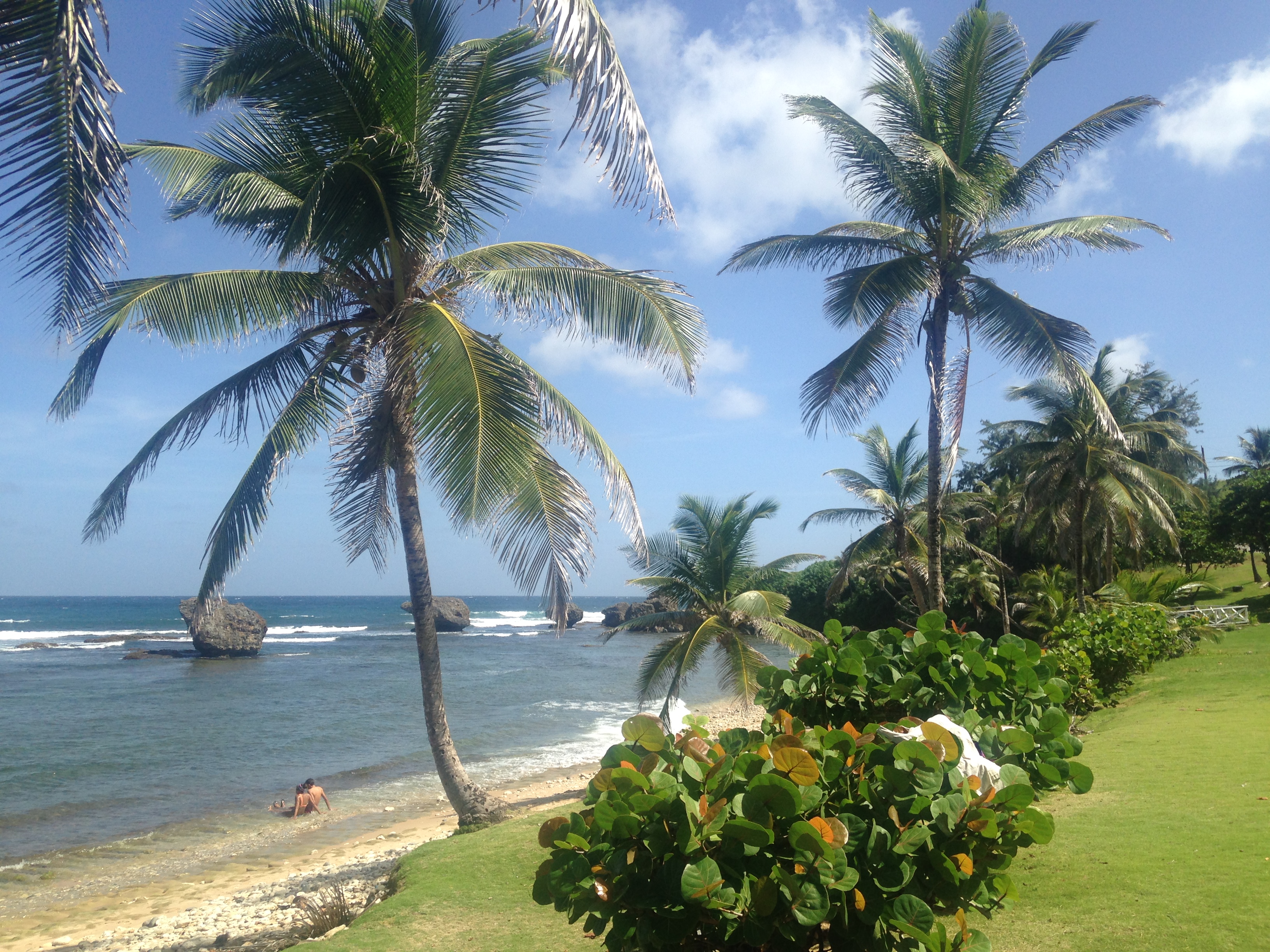
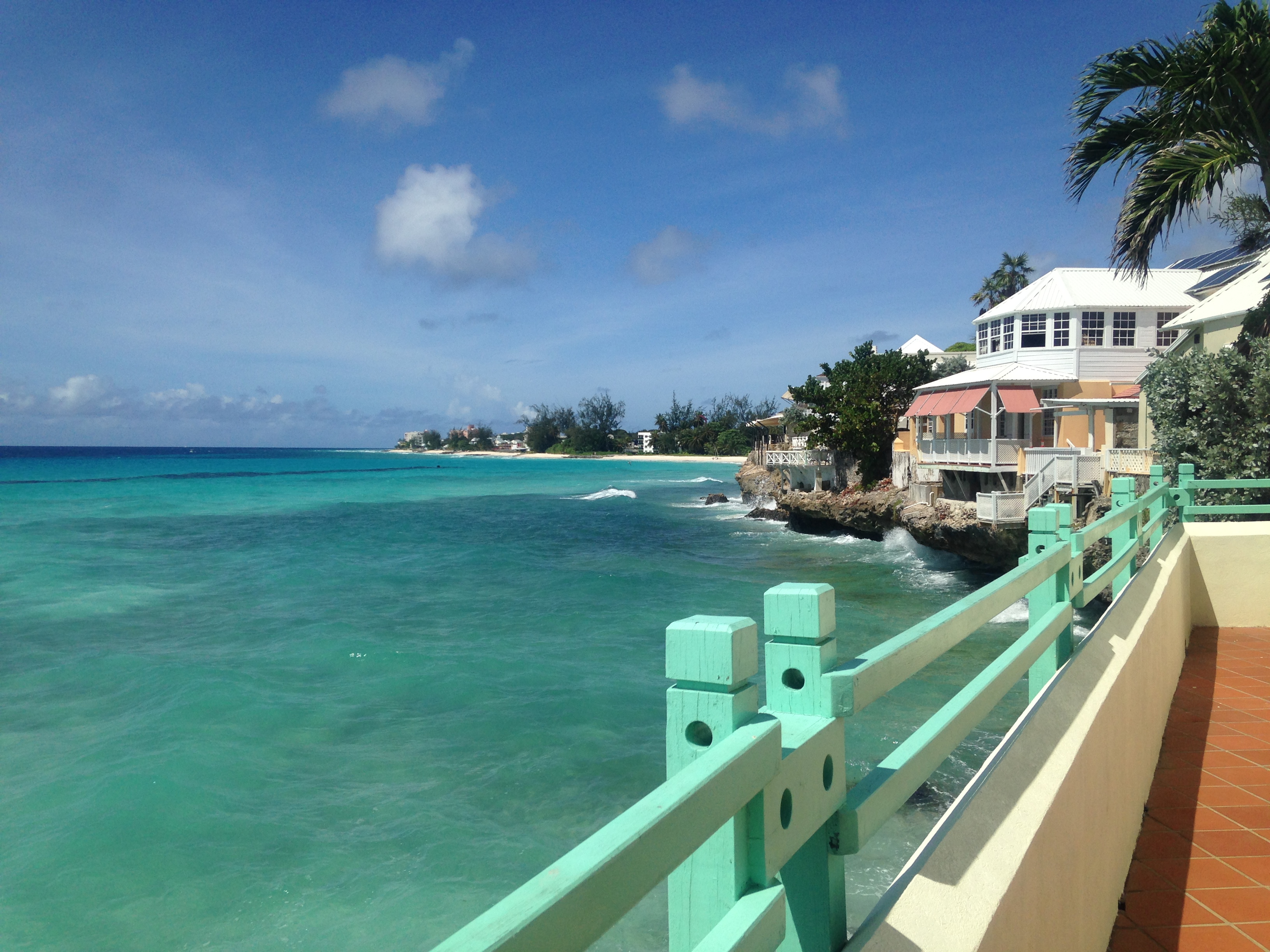
Still, I suppose that was a small price to pay for constant temperatures around 30C (yes, day and night), turquoise blue seas and the calming sound of waves crashing on the shore, right outside the bedroom window.

2017-11-19 15.05.50

Barbados is one of the southern-most Caribbean islands and consequently tends to miss many of the hurricanes which have been known to ravage the likes of Domenica and Haiti, further north. A magnet for Americans and Europeans alike, it has developed a reputation for fabulous food and luxury, VAT-free shopping.

But if your wallet doesn’t stretch to Vuitton and Versace, it’s still possible to enjoy a taste of the Champagne lifestyle on a beer budget.

By swapping one of the many all-inclusive, all-singing, all-dancing 5* hotels for a self-catering apart-hotel, you get the freedom to sample local fare from the seclusion of your patio, saving those all-important dollars to splash on a gourmet supper (or two) when the fancy takes you.

2017-11-15 15.13.37

If you’re a return tripper and happy to hire a car or use local cabs to get around, there are some real bargains to be found, too, on Air BnB.

You can get a private bedroom in a typical Barbadian home for as little as £29 a night and a 3-bed apartment with pool for just £84. Car hire is around £35 a day.

Of course, if you want to join Simon Cowell et al on the island, you’ll need to add a few extra noughts to your room rate.

Even if you’re not a rum drinker, it would be a sin to visit Barbados and not try the local rum punch. You can get them in all the bars, from about 5BD, but, if you can tear yourself away from the sun for a few hours, you might want to sample the delights of a rum tour – priced according to how much of the stuff you want to imbibe in the process.

Being a mere 21 miles long and 14 miles wide, you can easily tour the island, and most of its key sights, in a day.

But, being an island, many of its attractions lie offshore; it’s a magnet for divers, snorkelling in the calm waters off the West Coast is a must for those of a less adventurous disposition – and, for everyone, the opportunity to swim with the island’s native turtles is a must.

A note of caution:  choose your boat operator with care. After ours ‘broke down’ the first day – we didn’t believe them until we saw the state of it – it eventually dropped anchor in the middle of nowhere. Certainly not near any turtles, unless you were a really strong swimmer.

Kinda ironic to get back to the hotel and find them swimming right off the shore. You live and learn!

Another not-to-be-missed experience is the Friday night Fish Fry at Oistins, on the South West coast.

In sharp contrast to the laid-back manana kind-of service you get in many parts of Barbados, the Fish Fry sits somewhere between a drive-thru MacDonalds, a sprawling food court and a street market, with random entertainment from the local beat-boxers.

2017-11-18 00.27.42

Swordfish, dolphin fish (not to be confused with real dolphin!), flying fish, tuna and shrimp number among the numerous locally-caught species you can sample here, accompanied by things such as sweet potato and plantain.  A night out for local families just as much as for tourists, it’s a ‘must see’ to get a sample of typically tropical (oh no – not them again!) life.

If you’re brave enough, hop aboard one of the multitude of reggae buses which ply the main routes at the rate of around one every three seconds; it’s just US$1 (or B$2) per trip – but be prepared for a white-knuckle ride as drivers veer around the corners, keen to get as many folk on board as they can manage. You’ll rub shoulders with the locals – literally. I guess it’s the equivalent of the 7.20 from Paddington to Victoria……

Don’t be put off by those doom-mongers who warn you to be careful venturing out at night. Bajans are, on the whole, a massively friendly bunch and you’re less likely to come to harm than you will in any UK town or city after dark. Obviously, keep your wits – and your wallet – about you, just as you would at home and don’t invite temptation.

The four-hour time difference between Barbados and the UK makes it easy to join those who hit the beaches at 6am. Never before have I witnessed such ‘sunbed-bagging’ at this unearthly hour! However, the early morning is one of the most pleasant times to enjoy the beach – before the burning sun makes anything beyond a gentle stroll a distinctly sweaty experience!

So, if you’ve seen enough of Brixton town – or anywhere else – in de rain, you know what to do!


It’s not all grim ‘oop North’!

Did you know there’s a River Kent? But it’s not in the Garden of England – it’s 400 miles further north, in the Lake District.
As a northerner who has lived in the south for the past 20-odd years, it never ceases to amaze me how many folk have never ventured further north than Birmingham (if as far as that!)

Northerners regularly visit Devon, Cornwall, Dorset, Kent …….so how come so few southerners wait until they are nudging retirement before they head for the hills of Scotland, Northumberland, Lancashire and the Lake District?

When they do, they all agree that the scenery is stunning.
OK – so it rains a lot, but that’s why it’s so green and pleasant….

Take the right wet weather gear, a sturdy pair of walking shoes and you’re all set to explore ‘the frozen north.’

Pubs and all but the poshest of restaurants in the Lake District expect people to turn up looking a bit bedraggled from time to time, so you’ll be in good company if your neatly-coiffeured locks are not quite so well ‘coiffed.’

Of course, the ideal way to see all that the Lakes has to offer is to get out and about, braving the elements, during the day – but return to a relaxing retreat of a country house hotel, with roaring log fires and fabulous food of an evening. That way you can still pack your posh frock and enjoy the best of both worlds!

Serious walkers tend to head for the towering crags of the Langdales, but gentle strollers and softer southerners (!) might prefer the less strenuous slopes around Windermere, at the more accessible southern end of the Lake District National Park. (It’s also closer to the M6 if you feel the need to escape.)

Bowness, on the shores of Windermere, is a mere six miles from the aforementioned River Kent. Surrounded by stunning scenery, it’s also a similar distance from Tarn Hows, which offers one of the most spectacular views in the Lake District. It’s under an hour from the M6 which makes it an appealing location for weekend breaks all year round.
After an invigorating nine-mile hike in the woodland around Tarn Hows, beginning and ending at Beatrix Potter’s old haunt of Hawkshead, it’s easy to see why so many people head here, come rain or shine. The Sun Cottage café is renowned across the globe for its amazing cakes – but tread with caution: the portions are enormous!


Bowness itself is a great place for retail therapy once you’ve hung up your boots, being home to an abundance of art galleries and chic, independent shops. It’s not all Wainwright books and camping shops either – although there are a fair few! Treat yourself to some super fashion items, sheepskin rugs, stunning pieces of art and beautiful, unique pieces of jewellery.

You won’t walk far to find fine restaurants either – and service with a smile.

It’s what northerners do, you see.

The recently-refurbished Hydro Hotel, at the heart of Bowness and with suites overlooking the lake, is but a stroll from all the shops and restaurants.
Now part of Squire Hotels, it first opened as ‘The Windermere Hydropathic Establishment’ in 1881. Its Turkish baths were noted for their unique heating system and the elegance and grandeur of the era is still much in evidence in its high-ceilinged bedrooms, spacious lounge areas and wide-corridors.

If you’ve not had sufficient exercise running up and down a few mountains, it also has a small gym and heated indoor swimming pool – the perfect place to relax those muscles after a hard day’s hiking.

The 1881 restaurant – acknowledging the hotel’s origins – is a delightful setting for breakfast, where my (very experienced high-living) travelling companion dubbed the hearty three-egg breakfast omelette the best she’d ever tasted – high praise indeed!
And I must admit, my bacon was among the finest I’ve ever come across – lean and meaty, accompanied on the ‘Full English’ plate by locally-sourced sausages, free range eggs, mushrooms, tomatoes and beans – and the obligatory black pudding (you’re oop north, remember!).

Locally-sourced food is much in evidence on the dinner menu, with lamb rump, pulled pork and sirloin steak from nearby producers; sharing platters pay homage to the Italian staples of mozzarella, pesto and Parma ham – but also Bury black pudding! Most main courses come in between £8.95 and £14.95, with starters around £5.75. With room rates starting from £62, what’s not to like?

Squire Hotels have set out to change perceptions that Lake District hotels are expensive. For those of us acclimatised to southern prices, these kind of price tags appear excellent value for money.

Still some cash left over to buy Kendal Mint Cake, in fact!


#lakedistrict #hawkshead #bowness #windermere #walking #squirehotels #suncottage


Cape Verde – the new Caribbean?

“No stress”.

A beaming smile, brimming with optimism, radiated around a set of pearly white teeth.

Indeed, there was no stress – apart from this young man, owner of said teeth, who was hell-bent on selling me some of the wares from his mother’s stall….. or, failing that, his grandmother’s…… or maybe his aunt’s?

It mattered not – all the stalls were exactly the same.

I didn’t want – or, indeed, need – a wooden turtle or sand painting declaring prominently the words ‘Cape Verde’.

But to escape the sales banter (which would have gained the approval of any car salesman), I agreed to purchase a beach bag (you can never have too many) and a handful of hair combs that I could scatter among friends and family as marginally useful holiday ‘souvenirs’.

unspoilt beach

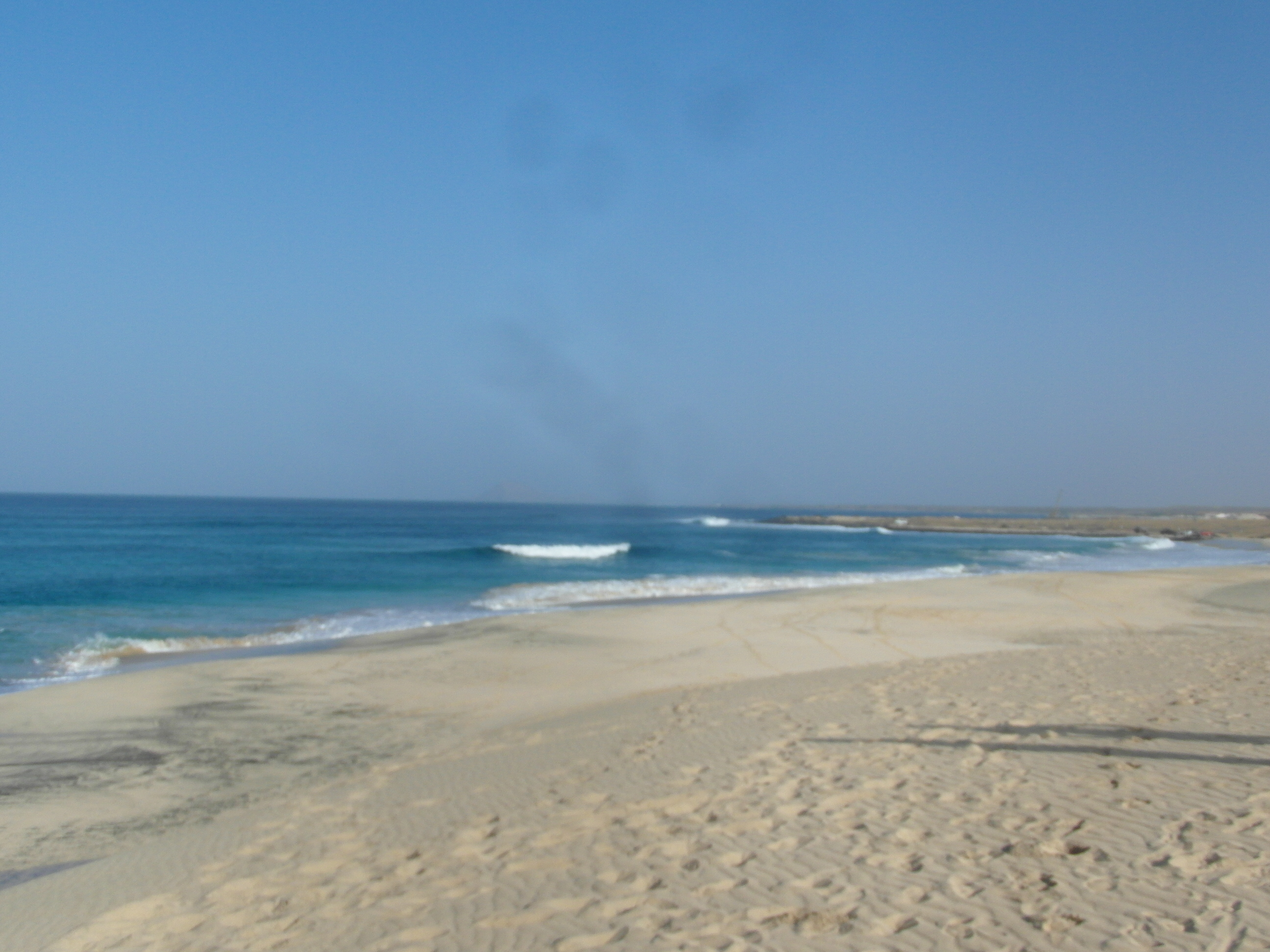
Cape Verde comprises 10 tropical islands in the Atlantic Ocean, 450 km off the west coast of Africa. Perfectly placed to find all-year round sunshine!

With a currency fixed to the Euro, politically very stable and fantastic beaches, it is the next up and coming destination. The problem is it has been up and coming for quite a few years now and is still in need of some serious investment.

The islands are littered with part-built apartments and half-constructed hotels – and, consequently, deserted beaches.

If you are happy to chill out in the sunshine, read books and sleep, this is the perfect location. If it’s sightseeing you’re after, don’t bother to read on. Go elsewhere.

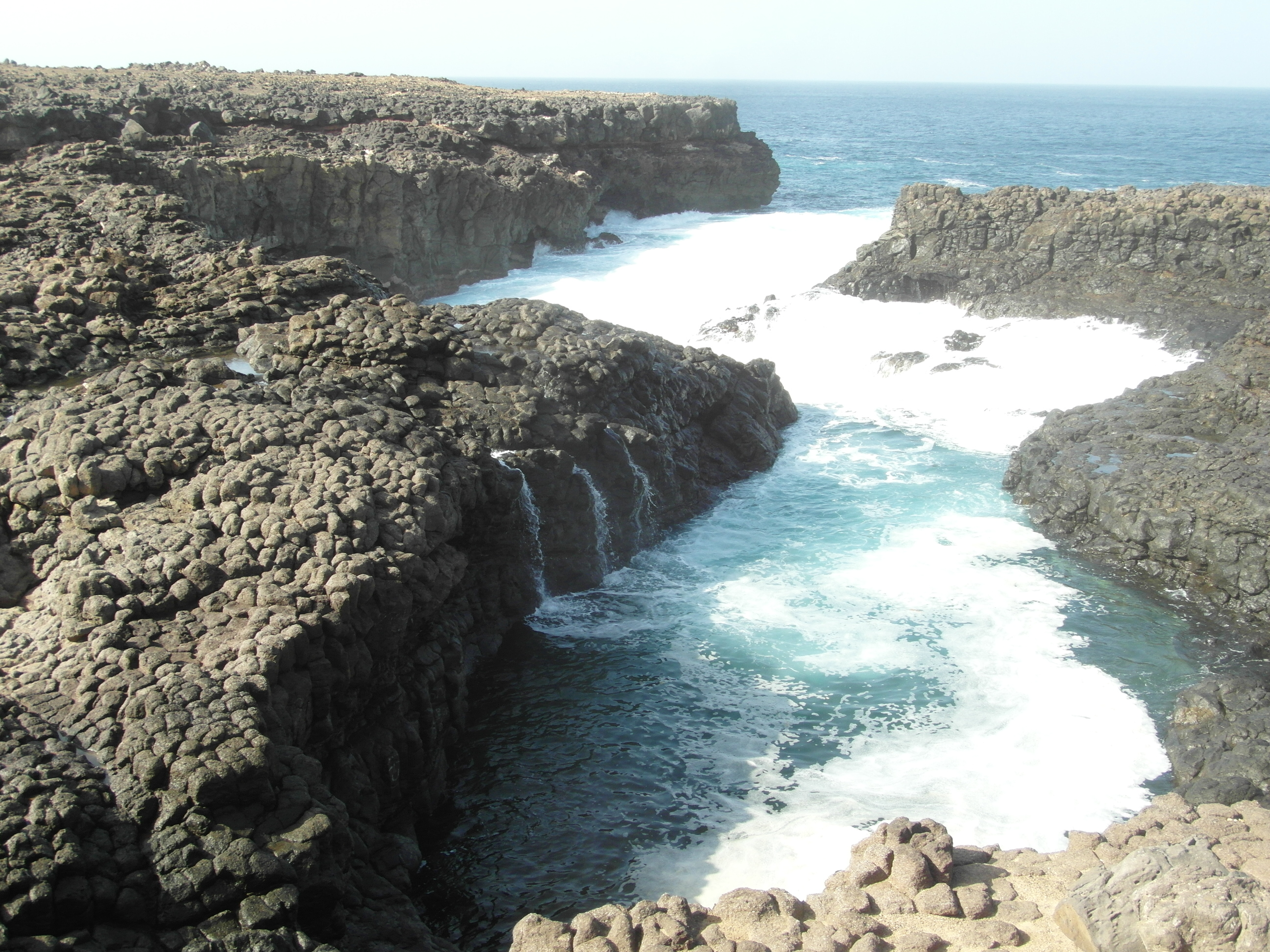
There are only four ‘main’ roads on the largest island of Sal. A short drive from the main resort area of Santa Maria are the salt pans at Pedra de Lume.  Nestled in the crater of an extinct volcano, the salt pans – once the lifeblood of the island – are no longer commercially viable. Instead, they have become Cape Verde’s answer to the Dead Sea: the chance to float weightlessly in the mineral-rich waters which will rejuvenate your mind and body and knock 20 years off your life. Allegedly.

volcanic rocks and rugged coastline

You can still feel the heat from the 5 million-year old volcano on your feet as you wade into the waters – even though it has been dormant for the last 3,000 of them.

Jose Luis Garcia Cuevas, Area Director of the Melia Hotel group on Cape Verde, believes that the islands and their burgeoning hotel business will be a magnet for low cost and budget airlines within six to 10 years, making this idyllic outpost more akin to its nearest neighbours, the Canaries – and the new Caribbean, only closer and more affordable.

With a flying time of only six hours and a two-week all-inclusive holiday in a five-star hotel still possible for under four figures, the Cape Verde islands are ideal for sun-seekers who really do want to get away from it all.

The beaches – a short stroll from the black volcanic rocks – are heavenly and the island of Sal is a dream for lovers of water sports and one of the top three kitesurfing locations in the world, alongside Fuerteventura and Haiti. It also offers some dramatic diving opportunities.

From the beach at Murdeira, you might even be lucky enough to spot dolphins at play. And, between July and November, make sure you visit the turtle sanctuary to see these magnificent protected species laying – or hatching – their eggs.

Cuevas came to Cape Verde from his home in Lanzarote to manage the Melia Tortuga which opened in December 2012. Plans were already in the pipeline for the Melia Dunas Beach, which followed in October 2014. The Llana Resort and Spa opened at the start of this year, completing a very acceptable hat trick for the Melia group.

Described as ‘an adults-only paradise right on the beach’ the 5* Llana has a luxury ‘bikini beach’ bar and restaurant complex within a man-made lagoon. Its rooms and suites have spectacular sea views and standards are all you would expect – so much so it hit the No 1 spot on TripAdvisor within months of opening its doors.

Cape Verde has a little over half a million inhabitants (tourists excepted) and has established its own Tourism and Hotel School to ensure that the locals get the very best training in order to provide the exceptional service today’s discerning travellers expect. (Melia Hotels employ 95% local people.)

With its all-year round temperate climate, it is perfect for the holidaymaker, but not so great for the locals. The hot, dry summers and hot, dry winters mean nothing – yes, nothing, grows on the island. The few cows, the odd donkey and passing goats look painfully malnourished.

Thankfully, bulging cargo ships dock daily at the tiny port of Palmeira bringing an abundance of fruit, veg and meat from the Canary Islands and further afield which means the main hotels offer some of the best and most varied food you will find anywhere.

With the thought that Cape Verde could soon become the next Tenerife, you could do worse than pack your bags and head for this Atlantic idyll sooner rather than later.

No stress.


The Boat to the Isles

There may have been a sign saying ‘not suitable for expectant mothers and people with heart, back or neck conditions’ – but I doubt it.

Fortunately, being the wrong side of 50, I certainly wasn’t pregnant, wasn’t aware I had a heart condition (to start with) and my long-standing back problem has been ‘in remission’ for the past couple of years.

However, it soon became apparent that the 45-minute boat ride from mainland Malaysia to the much-lauded Perhentian Islands was not for the faint-hearted. Nor for anyone with any of the aforementioned health issues.

This was no gentle cruise across crystal blue seas. It was a 50-knot marathon in a 30-foot speedboat driven by a man on a mission. Or on drugs. For one who baulks at the tamest theme park ride, this was nothing short of hell. A bit like its adrenalin-fuelled namesake, once committed, there really was ‘No Way Out.’

So began my mid-life introduction to the world of backpacking.

092As the crazed craft bobbed and lurched, I became painfully aware that most of the vertebrae in my spine were slowly being realigned.

The problem with visiting the Perhentians – popular with backpackers and a must for divers – is that there is no other way to approach this cluster of coral-fringed isles, off the north eastern coast of Malaysia.

The country’s main airport is a day’s drive away in the capital of Kuala Lumpur and, although there is a small internal airport at Kota Bharu, you can’t fly to these islands. So, unless you fancy swimming or rowing the distance, you’re at the mercy of the boat operators in Kuala Besut.

But the journey does mean you get away from the crowds which head for the more-easily accessible and more commercialised island of Langkawi, on Malaysia’s west coast, or its nearby Thai sisters.

If you’re an adrenalin junkie, it might add to the thrill. But one serious word of caution. Many speed boats operators don’t follow safety rules so beware of overloaded boats. They safely hold about 12 passengers – not 20.

Because of their inaccessibility, the Perhentian Islands still remain largely unspoiled; the soft white sandy beaches are edged with lush tropical palms and frequented by sizeable monitor lizards, squirrels and the occasional monkey.  However, this means that most of the accommodation lags well behind even Asian standards so you need to have a tough stomach – and not just for that boat ride.

Hygiene standards apart, the food is awesome – and cheap as the proverbial chips.You can get a plentiful meal for four for under a tenner.

059Rice and noodles abound, as you might expect, but Western food has – sadly – found its way onto the menu of most beachside bars. But don’t wait until you are hungry before deciding to eat – service can take up to two hours at the most popular cafes!

But this is a laid-back kind of life…. It’s almost too much effort to roll out of a beachside hammock to take advantage of the fantastic diving opportunities and excellent snorkelling just yards offshore.

Both snorkelling and scuba diving are accessible directly from the beach in many places – ideal for we less-confident swimmers who hate the prospect of plunging into the oceans from a boat. You don’t need to be an Olympic standard swimmer either to swim out from Flora Beach to the aptly-named Shark Point to find yourself surrounded by sharks of varying sizes, sea turtles and spectacular coral reefs. And the water is so warm, you don’t need to wrestle with a wet suit.

Diving is relatively inexpensive, costing RM70-90 (£12-£13) per dive and there are an abundance of companies offering their services.

Long Beach on Perhentian Kecil is by far the busiest beach on these fascinating islands and a magnet for young backpackers who party the night away, watching fire dancers and listening to Ibiza-style music into the wee small hours.

If you prefer the prospect of snoozing throughout long hot days which roll seamlessly into long humid evenings, then flip-flopping Crusoe-style to the nearest beach bar, head for Perhentian Besar instead – but it will mean another of those pesky boat rides.

Water taxis from one island to another are cheap – in line with everything else, really.If you are a backpacker on a budget, you might find the accommodation here expensive.  If you’re used to 5*, however, it’s ludicrously cheap.

A beach-side log chalet for two, complete with en-suite bathroom and shower (hot if you are really lucky) is around £30 a night.  Basic, but it does the job.

Because of the eastern monsoon, the season in the Perhentians is short, starting in June and ending in late October.

The climate is hot and humid but the ‘chill’ factor of these islands more than compensates – the only challenge is getting there.