When a friend introduced me to the Merlin Bird ID app, which records and recognises birdsong, what better place to test it out than Northumberland’s Farne Islands ?
Home to 23 species, the islands form quite probably the most fascinating seabird colony in England.
For those of us who live on the coast, paying £30 to visit a flock of seagulls might seem a tad excessive ; but this is not merely a holiday resort for those chip-stealing, car-pooping pests. It’s an opportunity to get up close and personal with puffins, plovers, cormorants, guillemots and – if you’re lucky – the occasional shag ( no rude jokes please !) plus another 17 winged varieties.
Unsurprisingly, perhaps, it’s those pesky gulls that continue to predate – pinching any unguarded eggs from the myriad of nests which cling precariously to the nooks and crannies of the cliffs.
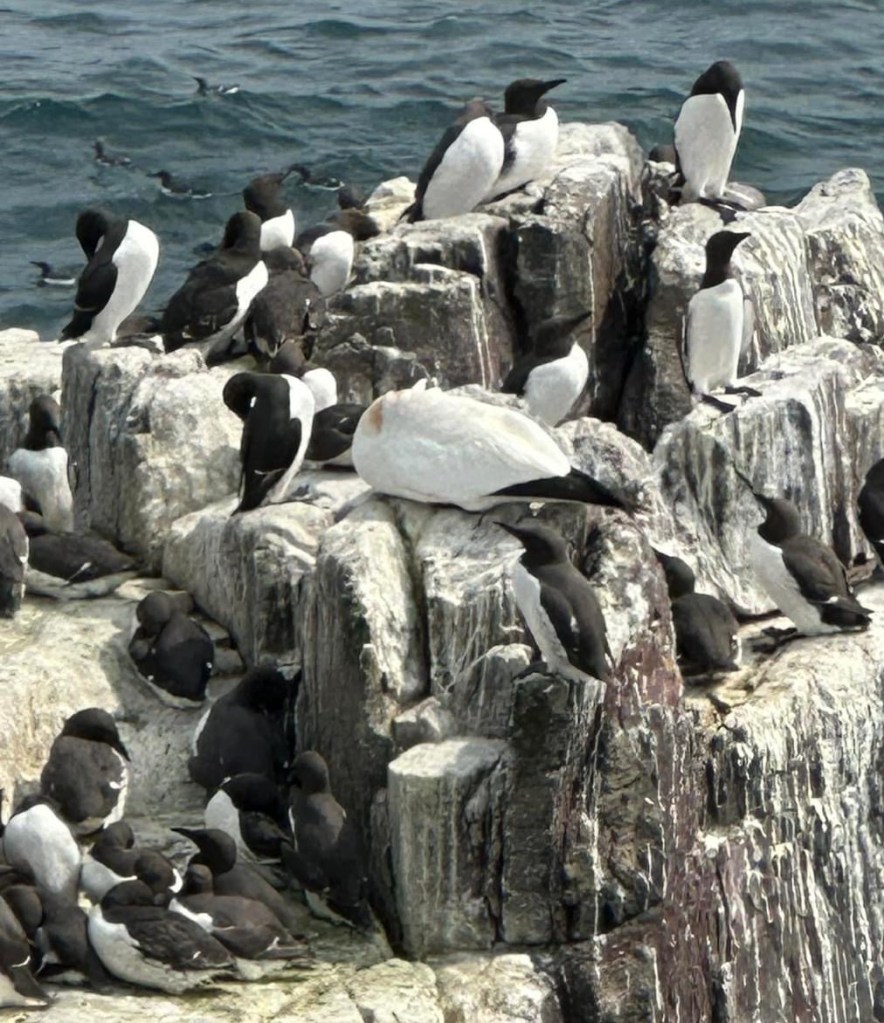
Huddled together on the guano-glistening slopes, tens of thousands of birds live in relative harmony, chirping, tweeting, mating and egg-laying throughout the spring.
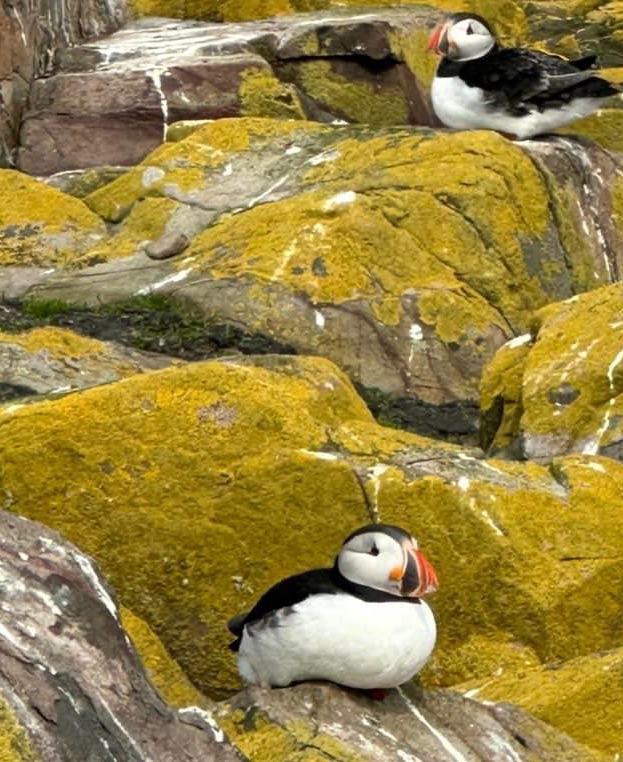
Thankfully Mother Nature has armed the puffins with an element of wisdom which enables them to outwit the greedy gulls. There are more than 40,000 pairs of puffins on Staple Island alone, each living up to 30 years. Faithful to the last, they mate for life and, mating over, they dig little holes, not unlike rabbit burrows, into the earth, where they drop the eggs then take it in turns to stand guard until they hatch.
Other species are less conscientious, however, and more nervous birds who are panicked into leaving their posts frequently return to find all their eggs are no longer in one basket, but in the stomach of some great black-backed gull. Its cousin, the black headed gull, meanwhile can be found busy stealing fish from the parent puffins.
Jonathan Livingston Seagull this is not !
The Farne Islands were first inhabited in the 7th century, when St Cuthbert established a monastery on Inner Farne. Inner Farne is currently the only island open to visitors, after the recent outbreak of Avian flu came hard on the heels of the Covid years. It still contains a tiny stone-built chapel and lighthouse tower, built in the 16th century.
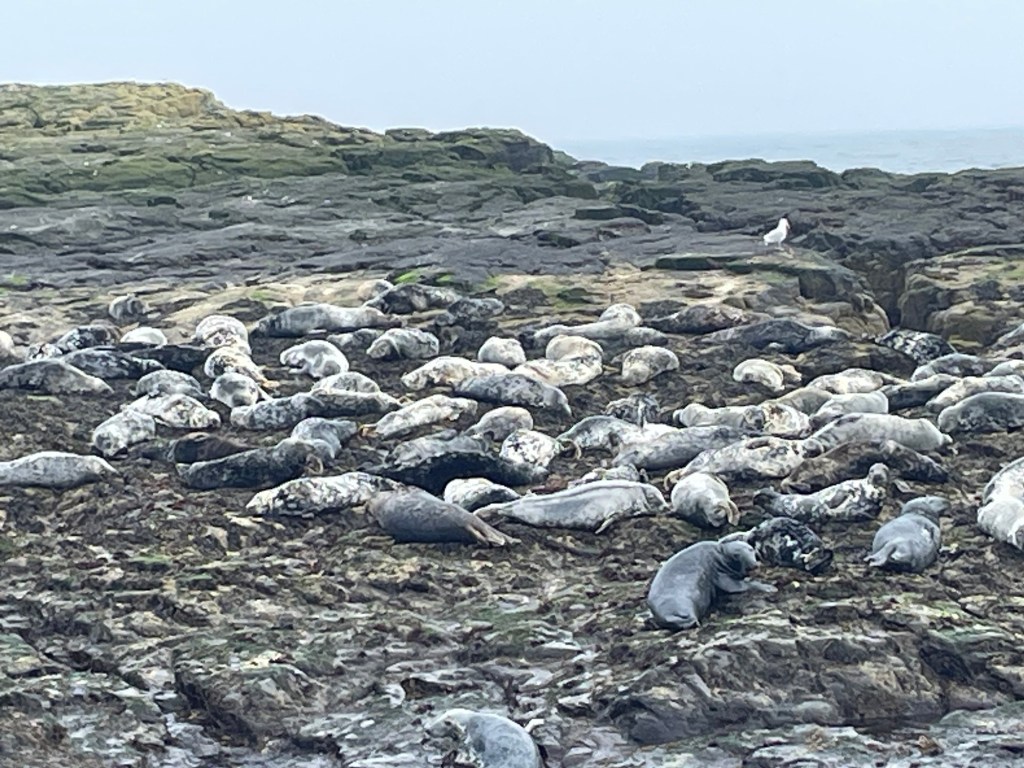
Basking on the shores of nearby Staple Island you’ll see dozens of seals, occasionally waving a wet flipper to the passing boats. And if you’re really lucky, dolphins might be at play in this particular section of the North Sea.
The islands – 28 at low tide and 14 at high water – are now managed by the National Trust and a team of rangers live on the islands from March to December, monitoring the bird population as well as trying to keep down the invasive species of nettle, dock leaf and other weeds which are threatening the birds’ breeding grounds.
Weather permitting, boats sail every day to the islands from Seahouses. Some merely cruise around the outcrop (I use the word cruise loosely….) but if you want to step ashore you’ll pay a further £13 to the National Trust. But it’s an experience not to be missed, especially on a sunny day.
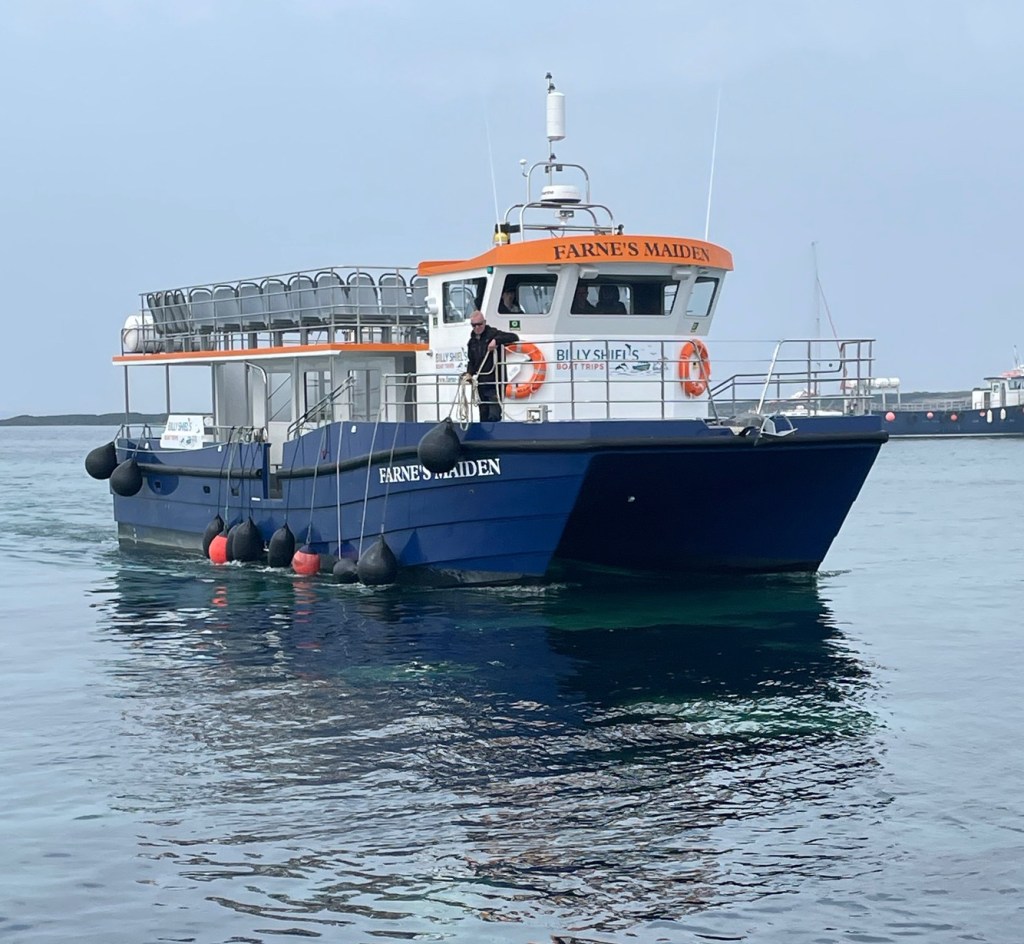
Operator Billy Shiel’s recently added a new catamaran to its fleet and the captain and crew do their utmost to make your trip both safe and enjoyable.
Oh – and don’t forget that Merlin app ! We picked up more than a dozen ‘tweets’ – and not on t’internet ! ( That’s because Twitter is now X – Ed.)
PS Thanks to Diane Bellinger for some stunning bird images.
 Globetrotting4Grannies